High-performing ads are not created through instinct alone. Behind every strong headline, Strong ad copy does not happen by luck. Every headline that earns attention, every message that builds interest, and every call to action that drives clicks follows a tested structure. When ad messaging follows these patterns, persuasion feels natural, and results become more consistent. If you want hands-on results with PPC services, your ad copy must align with the audience’s search intent to drive better ROI.
Different ad copy creation formulas serve different purposes. Some help introduce ideas to new audiences. Others work best when space is limited, and clarity matters most. Certain frameworks rely on emotion, while others focus on logic, proof, or urgency. Understanding when to use each structure removes uncertainty from writing ads.
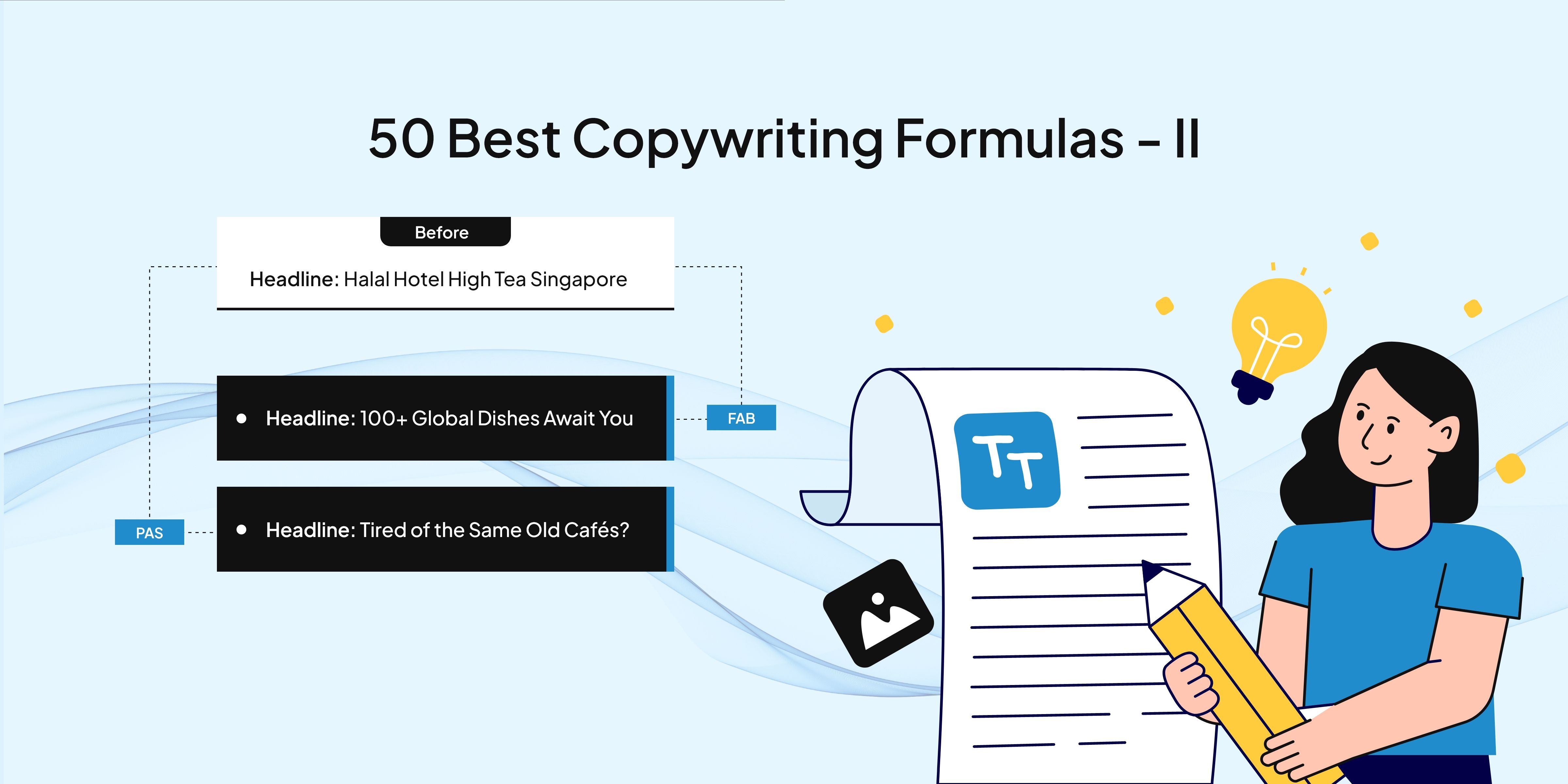
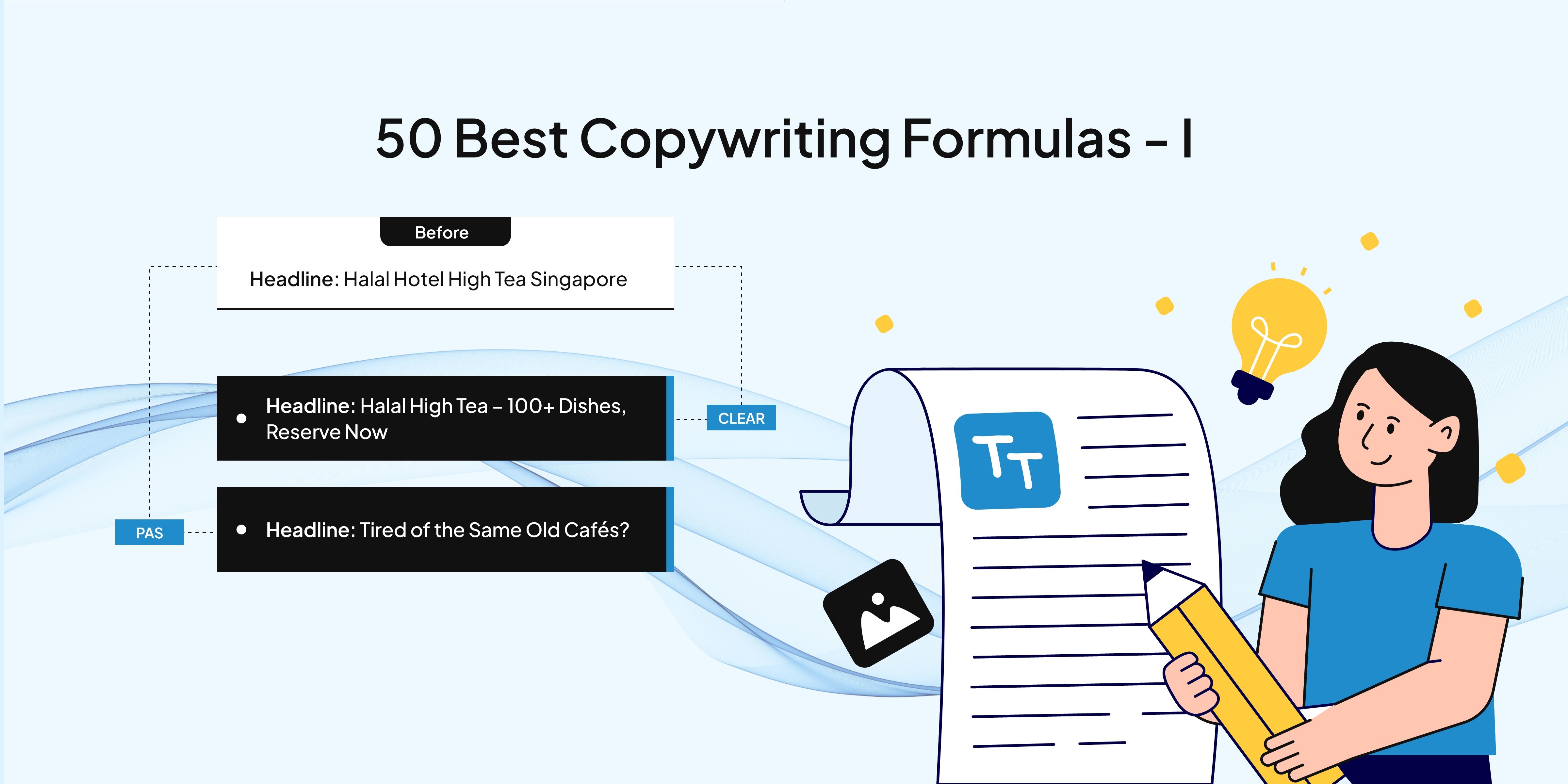
This 3-part series covers 50 proven copywriting formulas used across paid ads, landing pages, emails, and video content. Each formula includes a clear explanation and a practical example. The goal is simple. Here’s part 1 of the blog that will cover classic and psychologically based formulas.
Classic and Widely Recognized
This method relies on time-tested marketing principles that have proven effective across industries. It builds strong brand trust, enhances recall, and creates consistent engagement with audiences. By focusing on clear, recognizable strategies, it ensures messages are remembered and trusted over time.
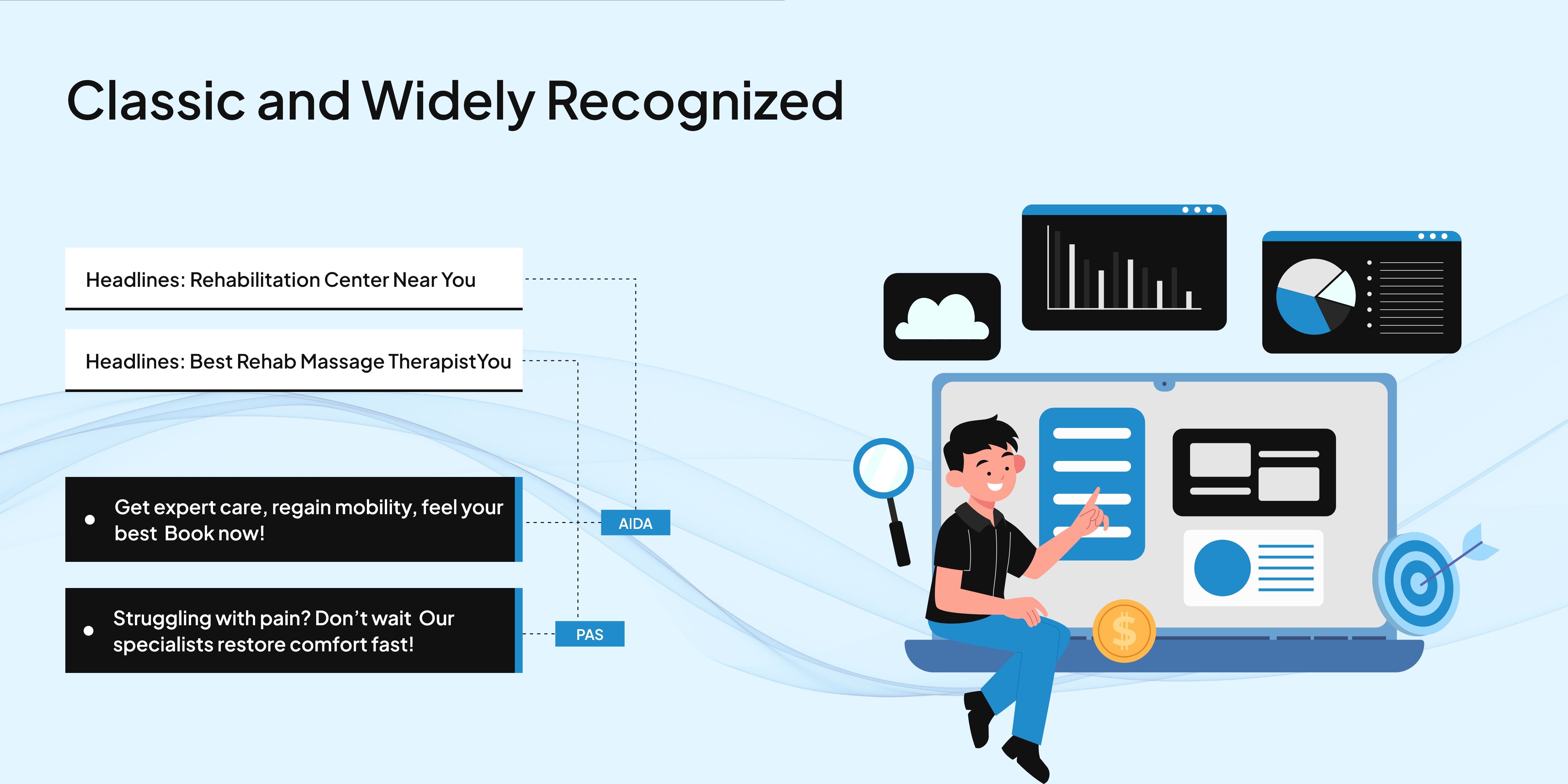
1) AIDA
Attention, Interest, Desire, Action
AIDA is one of the most structured copywriting formulas. It mirrors how people naturally make decisions when encountering an ad. First, the copy must interrupt attention in a crowded feed or page. Once attention is secured, it needs to hold interest by addressing something relevant to the reader. The next step is building desire by showing how the product or service improves a situation or solves a need. Finally, the copy must clearly tell the reader what to do next, removing hesitation or confusion.
This formula works especially well for landing pages, sales ads, and long-form promotions where the reader needs guidance from start to finish.
Example:
Attention: Your ads are getting views but no clicks
Interest: That usually means the message fails to connect with the real intent
Desire: Our copy framework helps shape messages that match buyer motivation
Action: Download the free guide now
2) PAS
Problem, Agitate, Solution
PAS is built around emotional clarity. It starts by identifying a specific problem the reader already experiences. Instead of staying surface level, the copy then expands on that problem by highlighting the frustration, cost, or consequences of ignoring it. Once the emotional weight is established, the solution is introduced as a natural and timely answer.
This formula is highly effective for ads, emails, and service-based offers where pain points drive decisions.
Example:
Problem: Your ads bring traffic, but very few leads
Agitate: That means wasted budget and constant second-guessing
Solution: Use structured ad copy that guides readers to act
3) FAB
Features, Advantages, Benefits
FAB helps bridge the gap between what a product offers and why the buyer should care. Many ads fail because they list features without context. This formula forces the copy to explain how each feature creates an advantage and how that advantage directly benefits the user in real terms.
FAB is ideal for product ads, software pages, and comparison-focused copy.
Example:
Feature: Pre-written ad headline templates
Advantage: Reduces time spent thinking about structure
Benefit: You launch ads faster with clearer messaging
4) 4Cs
Clear, Concise, Compelling, Credible
The 4Cs formula focuses on message quality rather than structure. It ensures the copy is easy to understand, quick to read, engaging enough to hold attention, and trustworthy enough to believe. If any of these elements are missing, the message becomes weak or confusing.
This approach works well for brand ads, homepage messaging, and short-form content.
Example:
Clear: Transparent pricing with no hidden fees
Concise: Set up your campaign in minutes, not hours
Compelling: Get better results without extra effort
Credible: Trusted by hundreds of marketers and verified campaigns
5) ACC
Awareness, Comprehension, Conversion
ACC is a logical flow designed to move readers from discovery to decision. First, the copy introduces a concept or problem the reader may not fully recognize. Then it explains the idea in simple terms so the reader understands its importance. Finally, it guides them toward a clear action based on that understanding.
This formula works well for educational ads and awareness campaigns.
Example:
Awareness: Many ads fail due to unclear messaging
Comprehension: Clear structure improves reader response
Conversion: Get the copy framework that fixes this
6) SLAP
Stop, Look, Act, Purchase
SLAP is designed for quick spreading environments like social feeds. It forces the copy to interrupt scrolling behavior, hold attention just long enough to communicate value, and push the reader toward action and purchase without unnecessary steps.
This formula is commonly used in short ads and promotions.
Example:
Stop: Your ads are being ignored
Look: See how structured copy changes results
Act: Read the breakdown
Purchase: Apply it to your next campaign
7) BAB
Before, After, Bridge
BAB focuses on contrast and transformation. It clearly shows the reader their current situation, then paints a picture of an improved outcome. The bridge explains how the product or service helps move from the current state to the desired result.
This formula works well for case studies, service ads, and result-driven messaging.
Example:
Before: Writing ads feels confusing and inconsistent
After: You create clear ads with confidence
Bridge: Follow these proven copy formulas
8) PPP
Picture, Promise, Proof
PPP blends imagination with credibility. The copy first helps the reader visualize a better scenario. It then makes a specific promise about the result. Finally, proof is provided to reduce doubt and build trust.
This formula is strong for trust-sensitive offers and lead generation ads.
Example:
Picture: Imagine ads that attract qualified leads
Promise: This framework improves message clarity
Proof: Used across hundreds of active campaigns
9) SCQA
Situation, Complication, Question, Answer
SCQA is a structured storytelling formula. It starts by setting context, then introduces a problem that disrupts the situation. This leads to a question in the reader's mind. The answer resolves that question and positions the solution naturally.
This formula is effective for explainer content and strategic messaging.
Example:
Situation: Businesses rely on paid ads for growth
Complication: Most ads fail to connect with buyers
Question: Why does this happen
Answer: Weak structure and unclear messaging
10) QUEST
Qualify, Understand, Educate, Stimulate, Transition
QUEST is designed to guide readers through a thoughtful decision process. It first identifies the right audience. Then it shows understanding of their situation. Education builds clarity, stimulation increases interest, and transition leads the reader to action.
This formula works well for high-intent audiences and service offers.
Example:
Qualify: This guide is for advertisers running paid campaigns
Understand: Writing effective ads can feel overwhelming
Educate: Structured formulas simplify the process
Stimulate: Better structure improves response quality
Transition: Start using these formulas now
Awareness and Psychology-Driven
This approach is based on understanding how people think, feel, and make decisions when encountering messages. By leveraging emotional and behavioral principles, it captures attention, sparks interest, and encourages meaningful action. It focuses on creating messages that resonate with the audience on a deeper level. Also, learn more about how psychology-based techniques improve ad copy to trigger emotions.
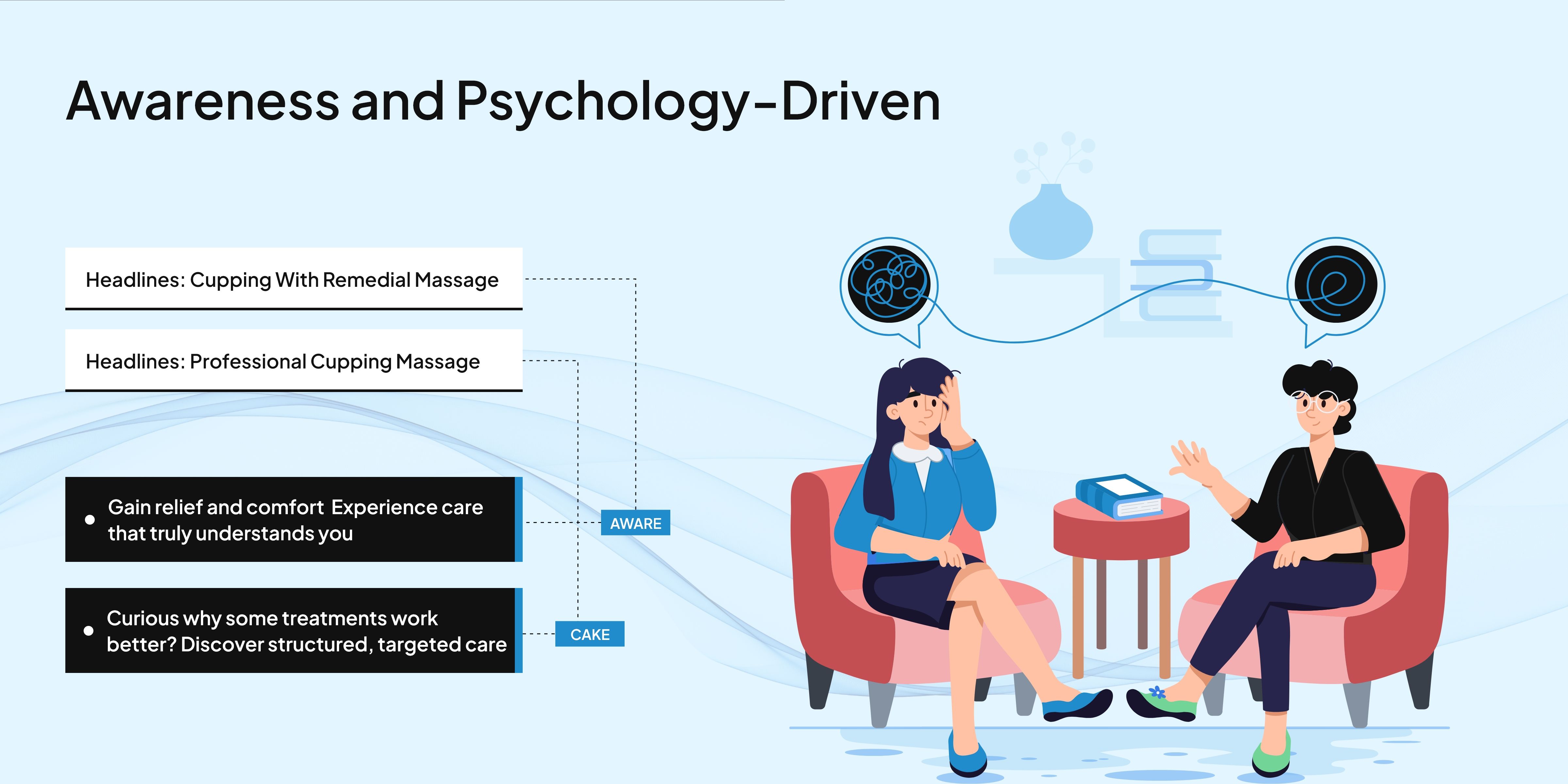
11) OATH
Oblivious, Apathetic, Thinking, Hurting
OATH is a market awareness-based framework that helps tailor copy to the reader mental state. Not all audiences are ready to buy. Some do not know they have a problem, some know but do not care, others are actively considering solutions, and some are already feeling severe pain and urgency. This formula helps writers adjust messaging so it matches where the reader currently stands instead of forcing a sales message too early.
OATH is especially useful when creating multiple ads for the same offer, each targeting a different level of awareness.
Example:
Oblivious: Many ads fail without a clear structure
Apathetic: Most marketers ignore copy frameworks and hope for results
Thinking: What if structure could improve ad response
Hurting: Poor ads waste the budget every day. This framework fixes that
12) AWARE
Attention, Awareness, Resonance, Engagement
AWARE focuses on emotional alignment rather than direct selling. It starts by gaining attention, then builds awareness around a situation or idea. The resonance stage connects emotionally with the reader by reflecting their experience or belief. Engagement encourages interaction, curiosity, or deeper exploration instead of immediate conversion.
This formula works well for brand ads, social content, and top funnel campaigns.
Example:
Attention: Your ads are being seen but not remembered
Awareness: Messaging matters more than reach
Resonance: Most marketers feel stuck repeating the same copy
Engagement: See how structured messaging changes responses
13) IDA
Interest, Desire, Action
IDA is a shortened version of AIDA that removes the attention stage. It assumes the reader is already paying attention due to targeting or context. The copy focuses on maintaining interest, increasing desire through relevance and value, and then guiding the reader toward action.
This formula is effective for retargeting ads, emails, and warm audiences.
Example:
Interest: Struggling to improve ad response
Desire: Clear copy formulas simplify decision making
Action: Start using them today
14) AICPBSAWN
Attention, Interest, Credibility, Proof, Benefits, Scarcity, Action, Warning, Now
This is a detailed persuasion formula designed for high-intent offers. It layers multiple psychological triggers in a specific order. After gaining attention and interest, the copy establishes trust through credibility and proof. Benefits explain value, scarcity adds urgency, and a warning highlights the cost of delay. The final step pushes immediate action.
This structure works best for sales pages, limited offers, and high-value promotions.
Example:
Attention: Most ads fail due to weak messaging
Interest: Structured copy improves response rates
Credibility: Used by experienced advertisers
Proof: Tested across real campaigns
Benefits: Clear messaging with less guesswork
Scarcity: Limited access available
Action: Join now
Warning: Delaying keeps wasting ad spend
Now: Start today
15) CAKE
Curiosity, Attention, Knowledge, Engagement
CAKE is designed to spark curiosity before delivering information. It pulls the reader in with an intriguing idea, holds attention long enough to explain something useful, and then encourages engagement rather than an immediate sale. This approach feels natural and low-pressure.
This formula works well for content ads, educational posts, and social media storytelling.
Example:
Curiosity: Why do some ads work instantly
Attention: The answer is not design or budget
Knowledge: It comes down to message structure
Engagement: Learn the formula behind it
Wrapping Up
In Part 1, we covered classic and widely recognized copywriting formulas. These frameworks form the foundation of persuasive writing and are used across most ad formats. You will learn how each structure guides reader attention, builds interest, strengthens desire, and prompts action.
Hold tight. Consider this your warm-up. Part 2 and Part 3 will take you into advanced frameworks that sharpen persuasion and turn creative ideas into consistent results. Part 2 will introduce the next fifteen formulas focused on benefit and conversion-driven frameworks. Part 3 will complete the series with the final twenty formulas built for trust, persuasion, and intent-aligned campaigns.