






ChatGPT advertising moved from speculation to a working ad platform in 2026, and most marketers are still figuring out where it fits in their plans. Ads started testing in the U.S. in February 2026, and the platform has kept adding formats, markets, and buying options at a pace that makes any guide a snapshot rather than a final word. This article covers what's confirmed, what's still moving, and the practical moves that will matter no matter how the details change. Where something is still evolving, it's flagged plainly so you can plan around it instead of betting on it.
What Is ChatGPT Advertising?
ChatGPT advertising is OpenAI's paid ad program that shows clearly labeled sponsored messages inside ChatGPT conversations for users on the free and lower cost plans.
ChatGPT Ads Explained
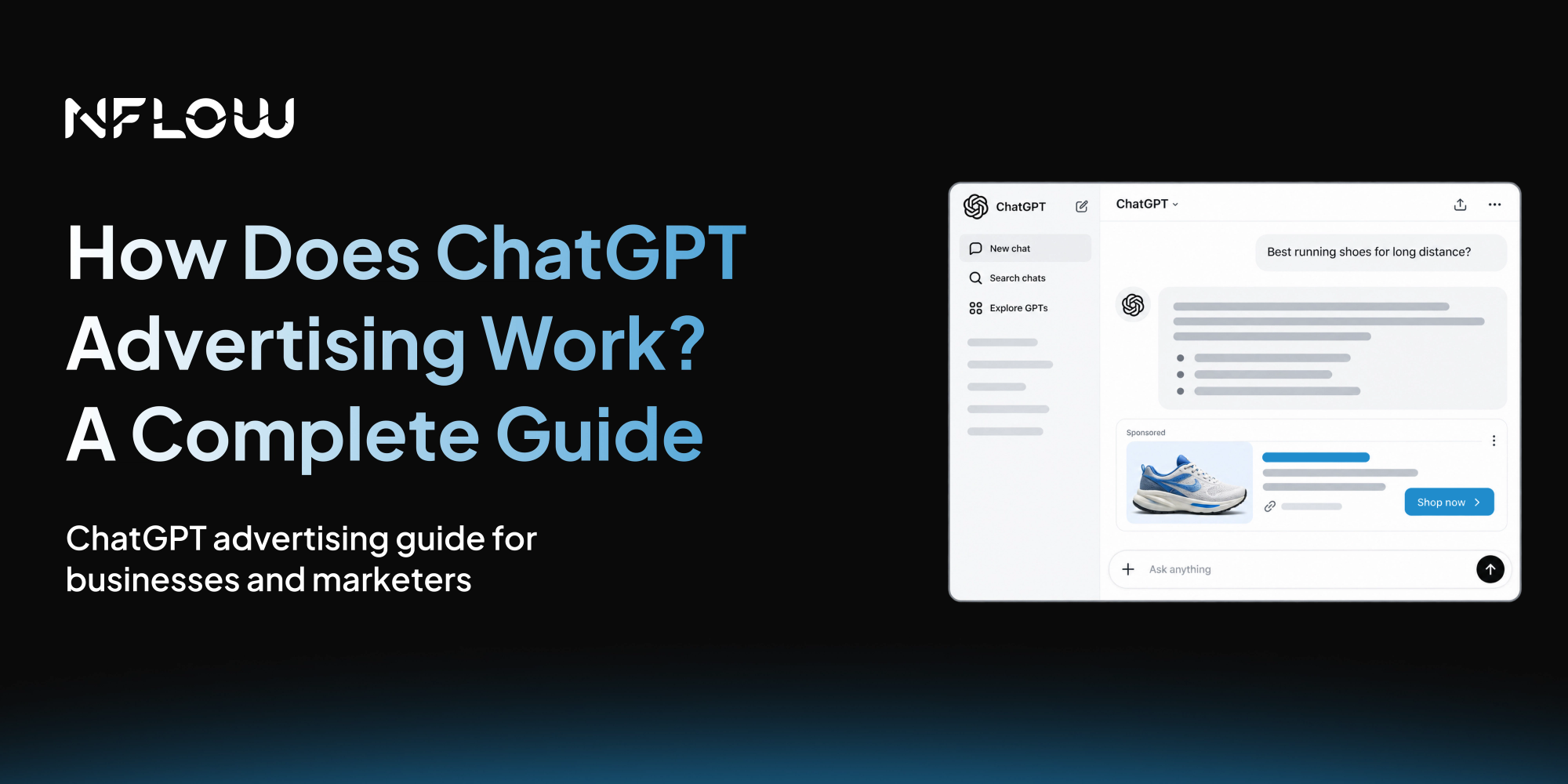
A ChatGPT ad is a compact unit shown under an answer, with a brand name, logo, headline, short description, image, and a link, which means your ad has to make sense to someone who just read a detailed response.
How ChatGPT Advertising Differs From Traditional Digital Advertising
Traditional ads interrupt a task, while ChatGPT ads arrive at the end of one, so the ad works less like a billboard and more like the natural next step after a question has been answered.
How Does ChatGPT Advertising Work?
Businesses build campaigns in OpenAI's Ads Manager, and ChatGPT's ad system decides in real time whether any ad fits the conversation, and if so, which one.
How Ads Are Displayed in ChatGPT
Ads sit below the response and are kept visually separate, which means the answer above your ad effectively acts as your pre-sell, for better or worse.
How ChatGPT Determines Which Ads to Show
The system looks at the topic and intent of the conversation, your ad's copy and landing page, the topic descriptions you provide at the ad group level, and, for users who allow it, signals from their wider ChatGPT activity. Those topic descriptions aren't keywords in the Google sense; they're closer to telling the system which problems you solve, so the advertisers who describe customer situations clearly will likely match better than those who paste in keyword lists. Eligible ads then compete in an auction where relevance counts alongside the bid, although exactly how the two are weighted hasn't been made public.
How User Intent Influences Ad Placement
A user planning a purchase is far more likely to see an ad than someone asking a history question, so the real inventory is concentrated in comparison, planning, and buying conversations.
ChatGPT Ads vs. Organic AI Responses
Ads don't change what ChatGPT says, so if the answer above already recommends a competitor, your ad is fighting uphill, and no bid can fix that.
Where Do Ads Appear in ChatGPT?
Ads appear below responses for adult users on the Free and Go plans in supported countries, and never for paid Plus, Pro, Business, Enterprise, or Edu accounts.
ChatGPT Ad Placement
Availability started in the U.S. and has expanded across many markets in 2026, but country coverage still changes often, so check current availability before building a plan around a specific region.
Sponsored Results and Recommendations
The newest direction is ads that open a branded chat with a business's own AI agent instead of a web page, which is still in testing but points toward ads that answer follow up questions on the brand's behalf.
How ChatGPT Ads Are Identified
Every ad is marked as sponsored, and users can hide ads, see why they were shown one, and control personalization, so an irrelevant ad is easy to dismiss and quick to lose ground.
How Does ChatGPT Choose Which Ads Users See?
ChatGPT chooses ads by weighing how well each one fits the conversation, what the user is trying to do, the advertiser's bid, and personalization signals where the user allows them.
Context and Conversation Relevance
Context is the foundation, which is why a narrowly relevant small brand can realistically win placements against a bigger advertiser with a vague ad.
Search Intent and User Queries
Search intent is the goal behind a question, and in ChatGPT it tends to be clearer than on Google because people explain their budget, constraints, and preferences in full sentences.
Audience Targeting
Options such as location, device platform, custom audiences, and product feeds exist, but targeting is intentionally broader than on social platforms, and the exact controls are still expanding.
Privacy and Personalization
Advertisers never see conversations or personal details and only get aggregate results, which protects users but also means you're optimizing with less visibility than you're used to.
What Types of Advertising Can Businesses Use on ChatGPT?
Businesses can run ChatGPT ads built for awareness, traffic, or conversions, with product feed campaigns and conversational formats widening the options.
Product Advertising
Retailers can connect a product feed, and the brands that win here will be the ones whose product titles and descriptions read like answers rather than catalog codes.
Brand Advertising
Impression based campaigns suit awareness goals, and they work best when the creative adds something the answer didn't, such as a specific offer or a clear point of difference.
Performance Advertising
Click and conversion focused campaigns are where most activity sits, which makes sense for a channel where users are already close to a decision.
Sponsored Recommendations
There's no way to pay for a mention inside ChatGPT's actual recommendations, so any agency promising paid placement in AI answers is selling something that doesn't exist.
How Much Does ChatGPT Advertising Cost?
ChatGPT advertising runs on an auction, so there's no fixed price, and typical costs aren't publicly benchmarked in a way you can rely on yet.
ChatGPT Advertising Pricing
Treat your first campaigns as paid research: set a modest budget, run them long enough to gather clean data, and let your own numbers set your expectations rather than anyone's averages.
CPC, CPM, and Other Advertising Models
CPC (cost per click) means you pay when someone clicks, CPM (cost per mille) means you pay for every thousand times your ad is shown, and conversion optimized campaigns aim for sales or leads while still billing on clicks or impressions.
Factors That Can Affect Ad Costs
Your price depends on your bid, your ad's relevance, how crowded your category is, and your targeting, and relevance is the one lever that can lower costs without raising your bid.
Is ChatGPT Advertising Available to Every Business?
No, advertisers need to be based in a supported country and pass account verification, and some categories are limited by policy.
Who Can Advertise on ChatGPT?
Most businesses in supported countries can advertise on ChatGPT through the self serve Ads Manager, as long as they pass verification and follow the ad policies.
Business and Brand Eligibility
Self serve access means small and midsize businesses can advertise on ChatGPT without a large media buying commitment, which levels the field more than most new ad platforms do at launch.
Industries and Advertising Categories
Ads are kept away from sensitive topics such as health, mental health, and politics, so healthcare and similar brands will likely get more value from organic AI visibility than from paid placements for now.
Advertising Restrictions and Policies
Policies focus on brand safety and keeping scams out, so expect reviews on every ad and plan for occasional rejections when launching in regulated categories.
How Is ChatGPT Advertising Different From Google Ads?
The ChatGPT vs Google Ads difference is simple: Google matches ads to what someone types, while ChatGPT matches ads to what someone means across a whole conversation.
ChatGPT Ads vs. Google Ads
Google Ads gives you mature controls and years of data, while ChatGPT gives you fewer levers but a user who has already explained exactly what they need.
Search Intent vs. Conversational Intent
A Google query like "CRM software" hides the buyer's situation, while a ChatGPT conversation often includes team size, budget, and deal breakers, and your ad should speak to that level of detail.
Keyword Targeting vs. Contextual Targeting
The ChatGPT vs Google Ads shift for advertisers is moving from managing keyword lists to describing customer problems well, which is a writing skill more than a bidding skill.
Ad Placement and User Experience
Google shows several ads above organic results, but ChatGPT shows its ad after the answer, so your ad is judged against a full response rather than a list of blue links.
How Is ChatGPT Advertising Different From Social Media Ads?
Social ads catch people while they scroll, while ChatGPT ads reach people while they're asking for help, so the creative should solve rather than entertain.
ChatGPT Ads vs. Meta Ads
Meta finds people based on who they are, while ChatGPT finds them based on what they're trying to do right now, which makes Meta better for creating demand and ChatGPT better for capturing it.
ChatGPT Ads vs. LinkedIn Ads
LinkedIn targets job titles and companies, while ChatGPT reaches B2B buyers during their research, often before they've spoken to any vendor.
ChatGPT Ads vs. TikTok Ads
TikTok rewards entertainment and video, while ChatGPT rewards clarity and usefulness, so repurposing social creative here will usually fall flat.
How Does ChatGPT Advertising Impact SEO?
ChatGPT advertising doesn't affect rankings or ChatGPT's answers, but it makes organic AI visibility more valuable, because paid and earned mentions now appear on the same screen.
ChatGPT Ads vs. Organic Visibility
Being named inside the answer carries the weight of a recommendation, while the ad below carries the weight of a promotion, and users know the difference.
The Relationship Between SEO and AI Search
When ChatGPT looks up current information, it draws on web pages it can find, read, and trust, so crawlable, well structured, authoritative pages are more likely to shape the answer. That makes classic SEO the foundation of AI search optimization rather than a separate discipline, and our guide on how to rank in ChatGPT search breaks down how that retrieval process works. The smartest setup pairs the two: organic work earns the mention inside the answer, and ads cover the conversations where you aren't mentioned yet.
GEO and AEO for ChatGPT Visibility
AEO (answer engine optimization) means structuring content to answer questions directly, and GEO (generative engine optimization) means making your brand easy for AI tools to understand, trust, and mention.
Can Ads Influence Brand Visibility in AI Search?
Ads can't change answers, but a brand people see and search for more often may pick up more mentions and links over time, an indirect effect that's plausible but not yet proven.
How Can Businesses Prepare for ChatGPT Advertising?
Make your brand easy for AI systems to understand, make your landing pages match conversational questions, and then test ChatGPT ads with a tracked budget.
Build Strong Brand and Entity Signals
Entity signals are the consistent facts that help machines recognize your business: your name, services, location, and the people behind it. Keep those details identical across your website, Google Business Profile, LinkedIn, and directory listings, and add Organization schema to your site. Then earn mentions on relevant outside sites, because AI tools trust what others say about you more than what you say about yourself.
Create High Quality, Helpful Content
Build landing pages that pick up where a ChatGPT answer leaves off, since a visitor arriving from a detailed conversation will bounce from a generic homepage.
Optimize for Conversational Search
Write headings as the full questions buyers ask and answer them in the first sentence, so both AI tools and readers get the point immediately.
Strengthen Digital Authority
Earn links and mentions from respected sites in your industry, because the authority that helps you rank is the same authority that helps you get named in AI answers.
Track Brand Mentions Across AI Platforms
Build a list of twenty questions your buyers actually ask, run them through ChatGPT, Gemini, Perplexity, and Google's AI Overviews every month, and track where you appear and where competitors do.
Benefits of Advertising on ChatGPT
The biggest benefit is reaching people at the moment they're deciding, not weeks before or after.
Reach Users During High Intent Conversations
People use ChatGPT to narrow down choices, so a well matched ad reaches them when a single useful message can tip the decision.
Context Based Advertising
Ads are matched to conversation topics rather than tracking data, which makes the channel less exposed to cookie loss and tighter privacy rules.
Potential for Personalized Experiences
Conversational ad formats could let a brand answer a prospect's specific questions instantly, something a static landing page can never do.
New Opportunities for Brand Discovery
Early channels tend to be less crowded, so smaller brands have a real window to appear in categories that are expensive and saturated on Google.
Challenges and Limitations of ChatGPT Advertising
ChatGPT advertising is still young, so thinner data, smaller reach, and measurement gaps are tradeoffs to plan for honestly.
Ad Availability
Paid subscribers never see ads, and those users often include the professionals B2B brands most want to reach, which skews the audience more than the headline user numbers suggest.
Privacy Considerations
Users can limit personalization or avoid ads altogether, and privacy laws in regions like Europe may keep targeting there narrower than in the U.S.
Limited Advertising Data
You'll never see the conversations that triggered your ad, so you lose the equivalent of a search terms report and have to learn from results rather than queries.
Measuring Conversions and Attribution
Attribution means crediting the channel that led to a sale, and it gets harder here because many users read an ad, leave, and convert later through a Google search or a direct visit.
User Trust and Transparency
People bring personal questions to ChatGPT, so an ad that feels pushy or off topic can damage your brand faster than on channels where people expect to be sold to.
How to Measure ChatGPT Advertising Performance
Measure ChatGPT ads with the platform's core metrics, then connect them to your own analytics so you judge them on revenue rather than clicks.
Impressions and Reach
Impressions show how often your ad appeared, and a sudden drop usually means your topic descriptions or creative have drifted away from the conversations you want.
Click Through Rate
CTR is clicks divided by impressions, and on ChatGPT it tells you whether your ad adds something to the answer rather than repeating it.
Conversions
Install conversion tracking and add UTM parameters to every link before launch, because retrofitting tracking later wastes the most valuable early data.
Cost Per Acquisition
CPA is spent divided by conversions, and it's the only fair way to compare ChatGPT with Google or Meta for the same goal.
Return on Ad Spend
ROAS is revenue divided by ad spend, and on a new channel it's worth judging over a longer window since buyers often convert days after first contact.
Brand Visibility and Assisted Conversions
An assisted conversion is a sale where a channel helped earlier in the journey, so watch for lifts in branded search and direct traffic during campaigns as a sign ChatGPT is doing quiet work.
The Future of ChatGPT Advertising
What follows is informed speculation rather than a confirmed roadmap, based on where the platform is visibly heading.
AI Powered Advertising
Bidding, targeting, and creative testing will likely become more automated, shifting the advertiser's job toward supplying clear product information and strong offers.
Conversational Commerce
The logical next step is ads that let users ask questions, compare options, and possibly buy without leaving the chat.
Personalized Recommendations
Ads will probably become more tailored to each user's situation, though privacy commitments should keep them from becoming as granular as social media targeting.
AI Search and the Future of Digital Marketing
Search budgets will likely split between Google and AI assistants, and working with a digital marketing agency that runs both paid AI advertising and AI search optimization will matter more than choosing one channel.
Conclusion
ChatGPT advertising is live, growing fast, and still changing, so preparation matters more than speed. The brands that win will be the ones AI systems already understand and trust. Keep your brand details consistent, build pages that answer real buyer questions, and treat early campaigns as tests with clear tracking. Use ads to cover the conversations where you aren't mentioned yet, while organic work earns your place inside the answer.
FAQs
Does ChatGPT have ads?
Yes, ChatGPT shows clearly labeled sponsored ads to adult users on the Free and Go plans in supported countries. Paid plans such as Plus, Pro, Business, Enterprise, and Edu remain ad free, and availability keeps expanding to new markets.
How does advertising on ChatGPT work?
Businesses create campaigns in OpenAI's Ads Manager, adding creative, budgets, and topic descriptions. When a user chats, an auction that weighs relevance alongside bids decides whether an ad fits the conversation and which one appears below the response.
How much does it cost to advertise on ChatGPT?
There's no fixed price because ChatGPT ads run on an auction, and costs depend on your bid, relevance, category competition, and targeting. The most reliable way to find your real costs is a small, carefully tracked test campaign.
Can businesses advertise directly on ChatGPT?
Yes, businesses in supported countries can advertise on ChatGPT directly through OpenAI's self-serve Ads Manager, without needing a large media commitment. Accounts must pass verification first, and some regulated categories face extra policy limits before ads can run.
Are ChatGPT ads personalized?
ChatGPT ads can be personalized using signals from a user's wider ChatGPT activity, but only when that user allows it. Advertisers never see conversations or personal details, and users can switch personalization off or clear their ad data anytime.
Are ChatGPT ads different from Google Ads?
Yes, Google Ads match ads to the keywords people type into a search box, while ChatGPT ads are matched to the context and intent of an entire conversation. That shifts the advertiser's focus from keyword lists to described customer problems.
Will ChatGPT advertising affect SEO?
ChatGPT advertising doesn't affect Google rankings or the answers ChatGPT gives, but it makes organic AI visibility more valuable. Paid and earned mentions now share the same screen, so strong SEO helps your brand appear inside the answer.
How can businesses prepare for ChatGPT Ads?
Businesses can prepare by keeping brand details consistent across every platform, publishing content that answers real buyer questions, and earning mentions on trusted sites. Setting up conversion tracking before launch makes the first test campaign far more useful.
Are ChatGPT ads clearly labeled?
Yes, every ChatGPT ad is marked as sponsored and kept visually separate from the answer, so users can tell paid content from organic responses. Users can also hide ads, see why an ad appeared, and manage their ad preferences.
What is the difference between ChatGPT Ads and ChatGPT recommendations?
ChatGPT Ads are paid, labeled units shown below the answer, while ChatGPT recommendations are part of the answer itself and can't be bought. Earning those organic recommendations depends on clear brand signals, helpful content, and genuine authority.
