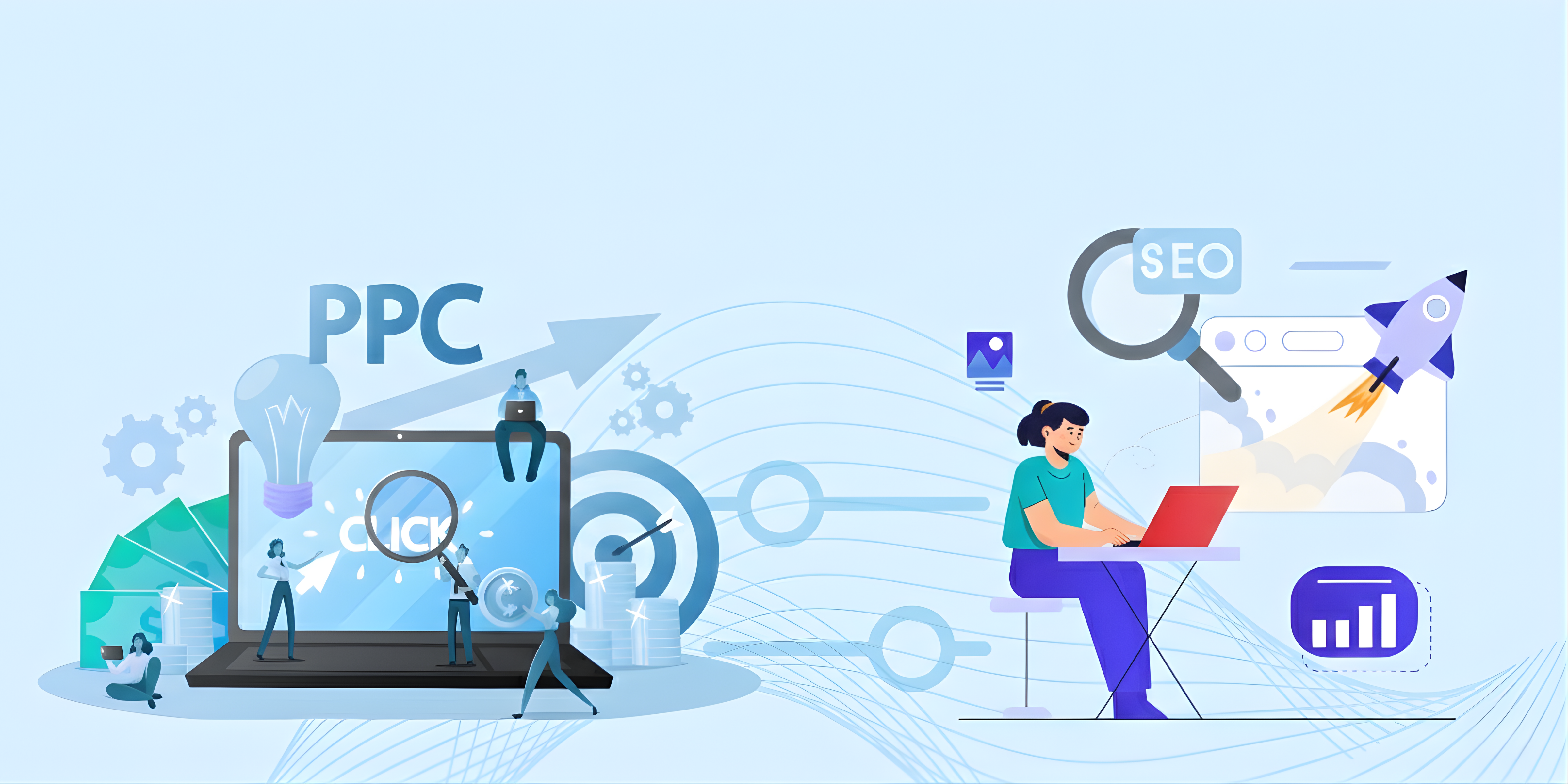
Most businesses still treat SEO and PPC like rivals fighting over the same budget. One team wants long-term organic growth. The other wants immediate paid results. They sit in different reports, different dashboards, and often different meetings.
That thinking is outdated.
The reality is simple. SEO and PPC operate on the same battlefield. The Search Engine Results Page. Same users. Same keywords. Same intent.
When these channels work together, performance does not just improve. It compounds.
Brands that integrate organic SEO and paid search have seen outcomes like a 22 percent lift in new user acquisition and, in some cases, a 159% increase in organic traffic once paid data was fed back into the SEO strategy. This is not a coincidence. It is a system design.
The question is no longer which channel wins. It is how tightly they work together.
What Happens When You Integrate SEO and PPC
Why does integration of organic growth and pay-per-click work so well? It starts with psychology and real estate.
- Visual Authority: When a user searches for your core service and sees your brand in the top paid ad spot and the top organic listing, you dominate the narrative. You crowd out competitors and signal market leadership.
- The Trust Multiplier: Some users instinctively skip ads. Others trust them. By appearing in both places, you capture all segments. That dual presence builds credibility; users see you as an established authority, not just a bidder.
- Boosted Click-Through Rates (CTR): Our Studies indicate that appearing in both paid and organic results can lift the CTR for both listings. You create multiple entry points to your brand, significantly increasing your share of clicks.
The Integrated Playbook - 4 Tactics for 1+1=3 Results
Here’s how to operationalize this synergy. (And remember: spending on ads does not directly boost organic rankings. The benefits are strategic and indirect.)
Tactic #1: The Keyword & Data Feedback Loop
This is where the magic starts.
- Mine PPC for SEO Gold: Your Google Ads Search Terms Report is a treasure map. It reveals the exact phrases people use that lead to conversions. Found a high-converting keyword with a costly CPC? That’s your cue to create targeted SEO content (landing pages, blog posts) to capture that traffic organically over time.
- Bridge the Timing Gap: Use PPC to bid on competitive, high-intent keywords today while your SEO efforts work to rank for those same terms over the next 6-12 months.
- Cover the Entire Funnel: Use SEO to capture broad, informational intent (“what is marine construction?”) and build trust. Use PPC to surgically target commercial intent (“emergency marine pile repair near me”) and drive immediate conversions.
Tactic #2: Rapid Testing & Optimization
SEO tests can take months to yield data. PPC tests take days.
- A/B Test Your Messaging: Run PPC ad variants with different value propositions and headlines. The winner (highest CTR/conversion rate) gives you proven messaging to use in your SEO meta titles, descriptions, and H1 tags.
- The Landing Page Loop: A PPC landing page with a 30% conversion rate is a masterpiece. Optimize that same page for SEO (content, backlinks, technical health) to attract organic traffic. Conversely, ensuring your SEO landing pages are conversion-optimized improves your PPC Quality Score, lowering your ad costs.
Tactic #3: Remarketing - The Strategic Safety Net
98% of first-time visitors leave without converting. Integration fixes this leak.
- Capture Organic Abandoners: A visitor finds your in-depth SEO blog post, reads it, and leaves. With a remarketing tag in place, you can now serve them customized PPC ads, guiding them to a related product or service page. This turns anonymous organic traffic into a warm, retargetable audience.
- The Proof: Retargeting campaigns often see conversion rates 147% higher than standard display campaigns in our study. It’s the ultimate complement to top-funnel SEO.
Tactic #4: Agile Budget & Launch Management
An integrated strategy is your lever for predictability.
- Compensate for Fluctuations: SEO traffic dipped after an algorithm update? Is it a slow seasonal period? Ramp up PPC spend to maintain lead volume and revenue predictability.
- Launch with Authority: Launching a new product or service? You can’t wait for SEO. Use PPC to generate immediate traffic and sales, while you build out the supporting SEO content hub that will sustain it long-term.
The Future-Proof Argument - GEO and SGE
Search results are changing. AI summaries now push organic listings further down the page.
As visibility patterns shift, relying on a single channel becomes risky. Integrated search ensures presence even as layouts evolve.
Adaptability belongs to brands that own both lanes. Paid placements still sit above the fold. A paid ad presence is your guarantee of visibility “above the fold” in this new AI era, while you adapt your SEO strategy for AI-powered search.
Real World Results from Integrated Search
- Tonic Studios UK: By integrating social, SEO, and PPC data, they achieved a 113% increase in organic conversions and successfully expanded into global markets. What made it work was alignment. PPC campaigns revealed which service keywords generated qualified leads fastest, and those terms were then built into SEO landing pages and blog clusters. At the same time, SEO content was repurposed into paid remarketing ads, keeping the funnel active even after the first visit. The outcome was not just more traffic, but higher quality conversions from organic search.
- Orbis Environmental: Through a qualified search term targeting strategy using blended paid and organic insights, they drove a 236% increase in organic sessions. They used PPC search term data to identify commercial intent phrases that their competitors were bidding heavily on. Instead of relying only on ads, they created SEO pages around those exact terms and used PPC to maintain visibility during the ranking phase. Once SEO rankings improved, they reduced spending on high-cost keywords and redirected the budget toward new opportunities.
These results did not come from channel loyalty. They came from coordination.
Conclusion
SEO builds long-term trust and authority. PPC buys immediate attention and data. Alone, each is powerful. Together, they form a self-reinforcing system that maximizes visibility, captures demand at every stage, and drives predictable, scalable growth.
The strongest search strategies do not ask which channel to choose. They audit overlap, gaps, and inefficiencies. They replace expensive clicks with organic wins and use paid search where speed and certainty matter most.
If you want predictable results, stop running SEO and PPC in parallel. Start running them as one system. Start treating your search strategy as a single, powerful engine. The predictable results will follow.