

A client emails and asks if you can run their Google Ads. You say yes, because you don't want to lose the account, and then you remember you don't have anyone who actually runs Google Ads. This is exactly where a white label Google Ads agency comes in: a partner that runs the ads while your name stays on everything. I've watched plenty of agency owners hit this same wall. This guide explains, in plain words, how white label Google Ads works, what it costs, where it goes wrong, and how to choose a partner you can trust.
What Is a White Label Google Ads Agency?
A white label Google Ads agency is a company that builds and runs Google Ads campaigns for other agencies, who then sell that work to their own clients under their own brand. "White label" simply means the work carries no label of its own, so you can put yours on it.
Think of it like a restaurant with a specialist kitchen. The customer sits down, sees the restaurant's name on the menu, and eats a great meal. They never meet the chef in the back who actually cooked it. You're the restaurant, the white label partner is the kitchen, and your client is the happy customer who only knows your name.
White label vs. regular agency vs. freelancer
The real difference comes down to whose name the client sees and who carries the risk. A regular Google Ads agency works with the client directly, under its own brand. A freelancer does the same, usually solo and cheaper, but with less backup if they get sick or too busy. A white label Google Ads partner works behind you: the client is yours, the relationship is yours, and the partner stays invisible. You keep the client, they do the heavy lifting.
How a White Label Google Ads Agency Works: Step by Step
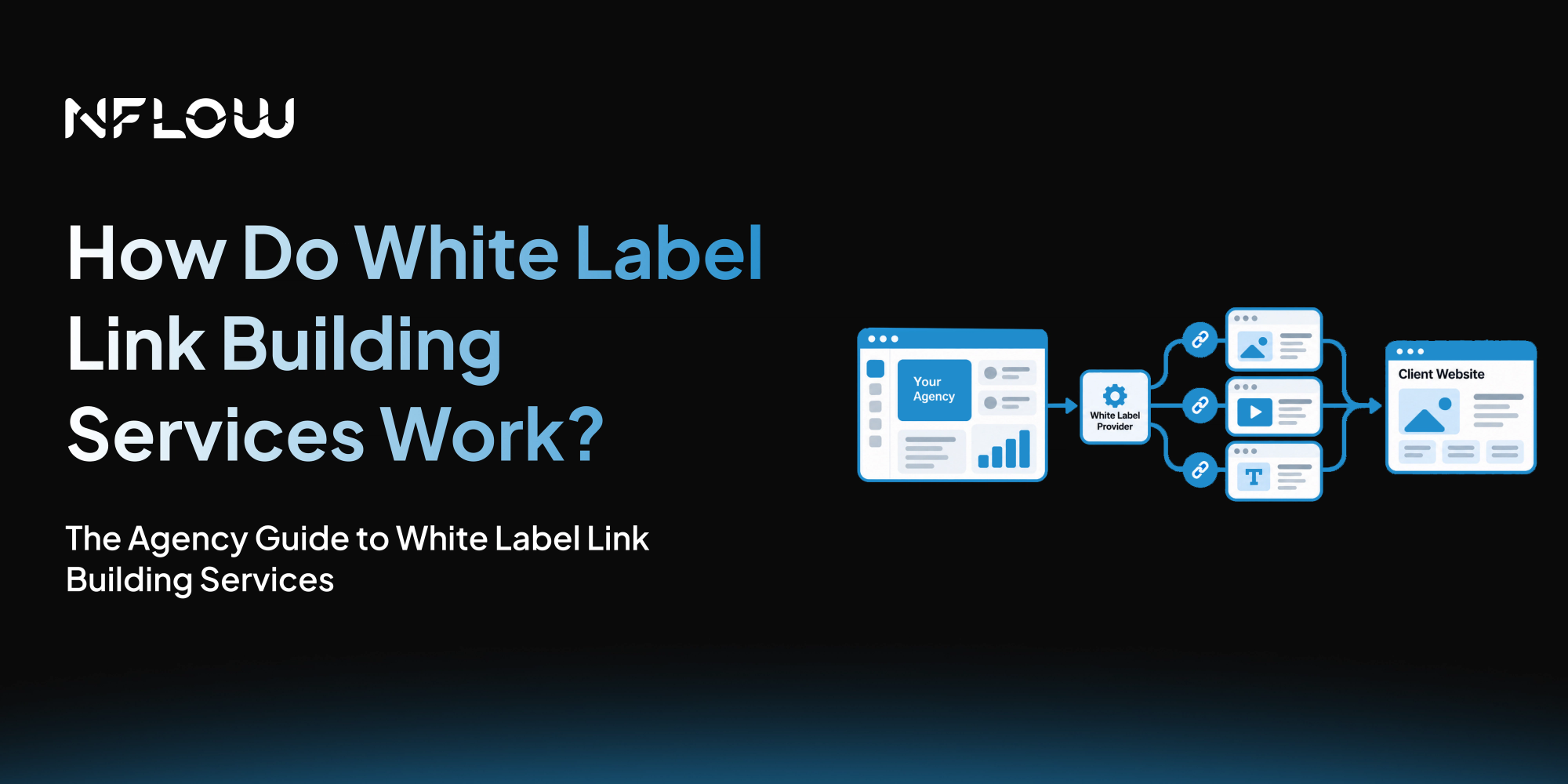
A white label Google Ads agency works in five simple steps: you win the client, you pass the details to your partner, they build and run the ads, you get reports with your logo on them, and you present the results as your own.
Step 1: You sign the client
You handle the sale and sign the client, just as you do now. The client agrees to a monthly fee with you and believes your team is running their ads. Nothing about your pitch has to change. In my experience, this is the part agency owners are already good at, since selling is the reason they have the client in the first place.
Step 2: You send the details to the partner
You hand your partner everything they need to start: the client's goals, monthly ad budget, website, and access to the ad account. Goals might be leads, sales, or phone calls. The budget is what the client will spend on ads each month. Access is usually given through a manager account, also called an MCC, which is a single Google Ads login that can manage many client accounts without owning them (see Google Ads Help on manager accounts). The clearer your brief, the better the campaigns.
Step 3: The partner builds and runs the campaigns
Your partner builds the campaigns, writes the ads, sets the targeting, and manages the account day to day. This is the real work: keyword research, bids, ad copy, and constant small fixes to cut waste and lift results. You don't have to touch the account unless you want to. A good partner checks in on a set schedule instead of going quiet for weeks.
Step 4: You get branded reports
Your partner sends you reports with your agency's name and logo on them, not theirs, and that is what "branded" means. You pass these straight to your client, or drop them into your own dashboard first. The client sees your brand from start to finish. A clear report in plain language often matters to the client as much as the results do.
Step 5: You share the results with your client
You present the results as the face of the work, and you own the relationship. You answer the client's questions, lead the strategy conversation, and decide when to raise budgets. If the client wants a change, you relay it to your partner. To the client, it's all you.
What Services Does a White Label Google Ads Agency Provide?
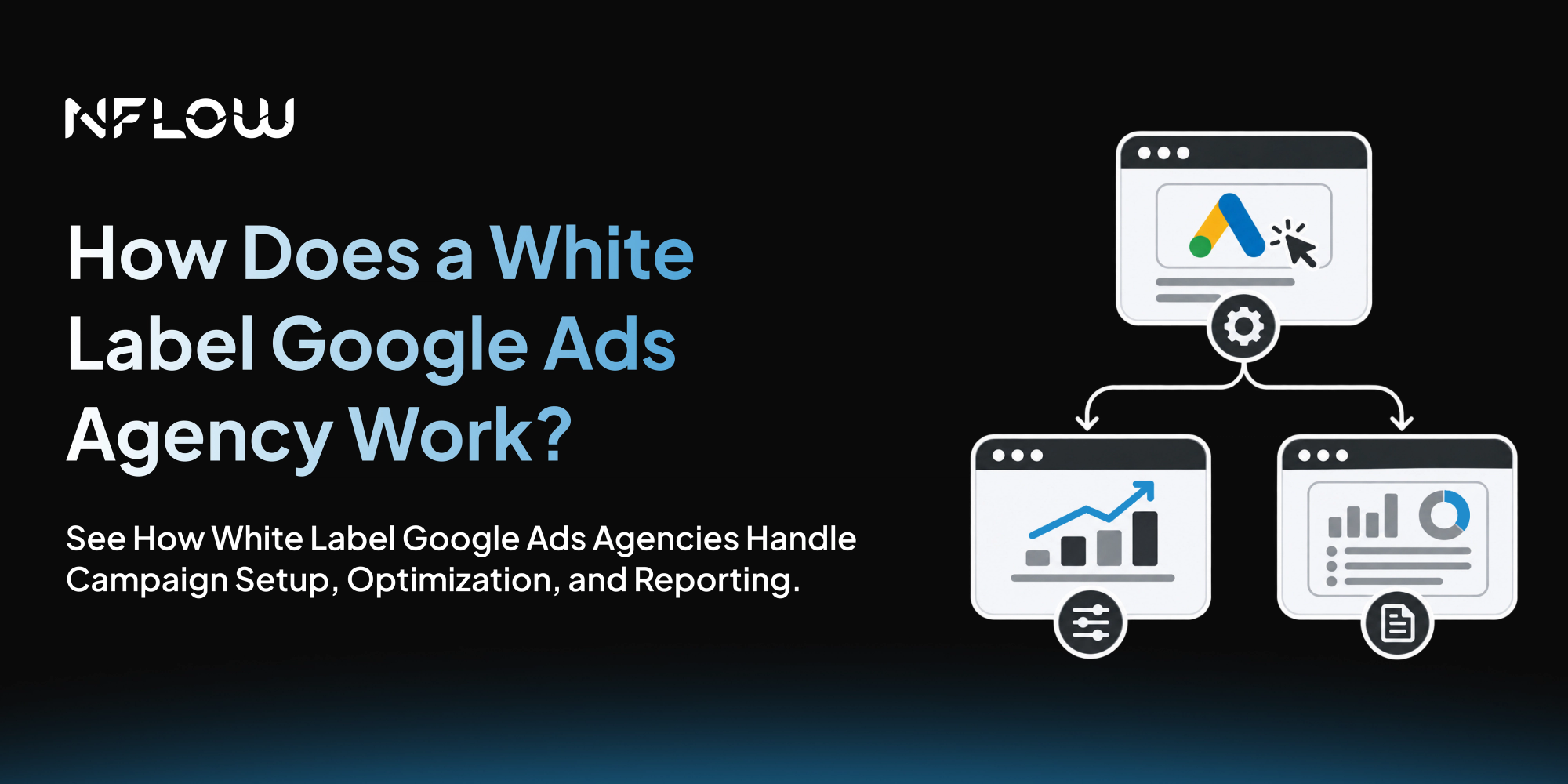
A white label Google Ads agency handles everything inside the account: the campaigns, the keywords, the ads, the tracking, and the reports.
Search, Shopping, Display, YouTube, and Performance Max campaigns
These are the main Google Ads campaign types, and a good partner knows which one fits each client.Search ads are the text ads at the top of Google results. Shopping ads show product photos and prices for online stores. Display ads are the image ads you see on other websites. YouTube ads are the videos that play before or during clips. Performance Max is a newer type that spreads one campaign across all of these automatically.
Keyword research, ad copy, and landing page advice
The partner finds the words people search, writes the ads, and tells you how to improve the pages those ads point to. Clear ad copy matters as much as the targeting, because an honest, specific ad usually beats a clever one. Landing page advice matters because even strong ads fail if the page they lead to is slow or confusing.
Conversion tracking and reporting
Conversion tracking tells you which clicks turned into real actions, like a form filled or a call made, so you know the money is working. Without it, you're guessing. The partner sets it up and then reports on it in your branding, so you can show clients exactly what their spend produced.
How Pricing and Profit Work
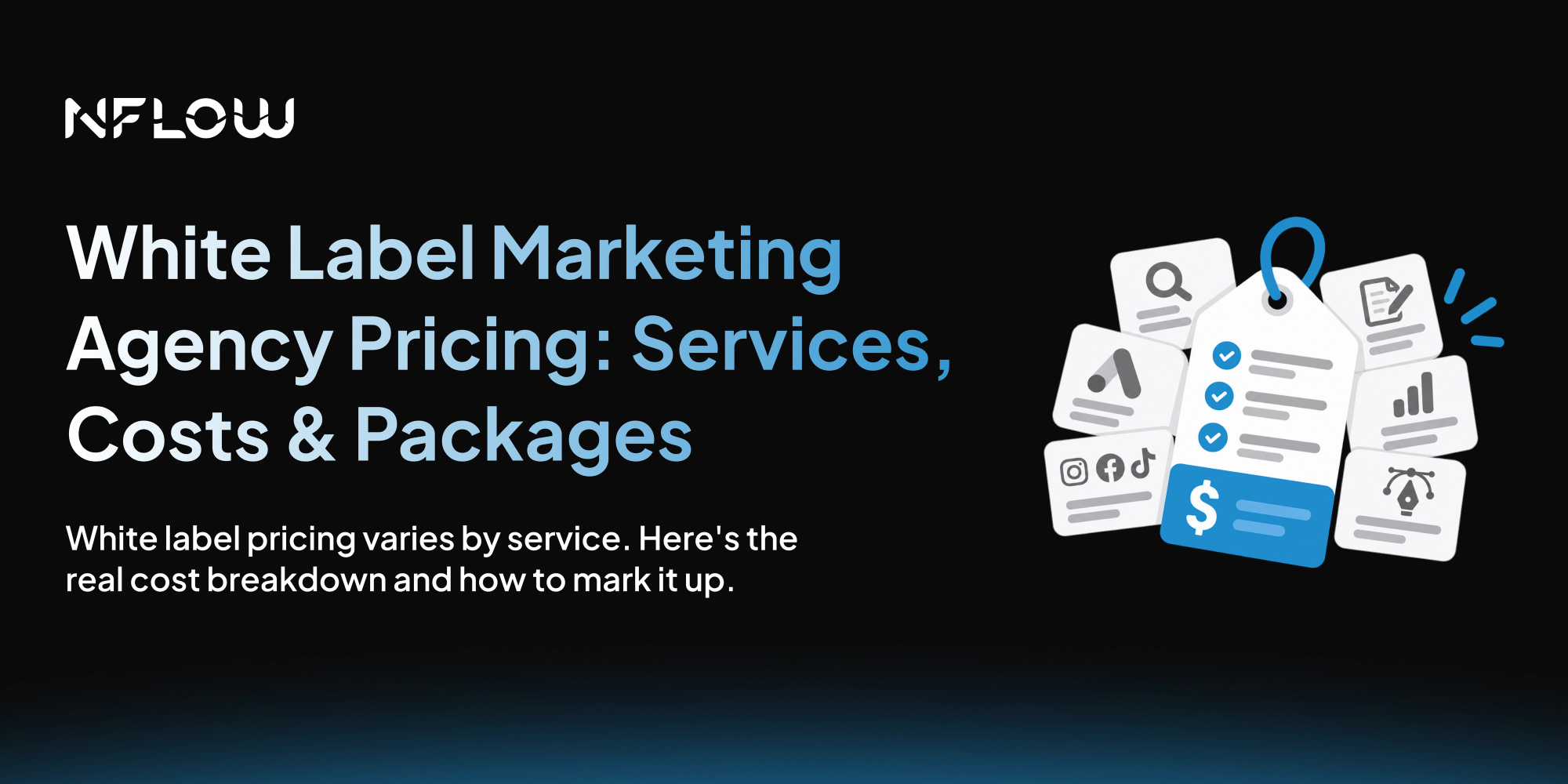
You pay your partner a wholesale fee, charge your client a higher retail fee, and keep the difference as profit.
Common pricing models (flat fee, percent of ad spend, hybrid)
Partners usually price in one of three ways, and each has a trade-off. A flat fee is one set monthly amount, no matter the budget, which is simple to plan around. Percent of ad spend means the fee is a share of what the client spends on ads. Industry pricing guides commonly put PPC (pay-per-click) management at around 10% to 20% of ad spend (WordStream). A hybrid charges a smaller flat fee plus a percentage, balancing steady income with room to grow.
Keep one thing straight: ad spend and the management fee are separate. Ad spend is the money paid to Google to show the ads. The management fee is what your partner charges to run them. The two never mix.
A simple example of margin per client
Here is an illustrative example, not a real client result, using round numbers to show how the margin works.
The math is simple: $1,000 minus $600 leaves $400 in profit each month, before your own costs like sales and account management. With ten clients on similar terms, that would be $4,000 a month for work your partner delivers. Your real numbers depend on what you charge, what your partner charges, and how much attention each client needs. And remember, the client's ad budget sits on top of all this and goes straight to Google.
Who Should Use a White Label Google Ads Agency?
A white label Google Ads partner fits any business that has clients who want ads but no in-house team to run them.
SEO agencies, freelancers, and marketing consultants
These four groups are the best fit, because each already owns the client and is only missing the person to run the ads. SEO agencies already rank clients on Google, so adding paid ads is a natural next offer that also fills the gap while SEO slowly builds. Web design agencies finish a site and then watch the client go elsewhere for traffic, when running ads could keep that budget with them. Freelancers can take on bigger projects without turning down the paid search part or hiring help they can't yet afford. Marketing consultants can recommend and deliver Google Ads as part of a full plan, instead of handing clients off to someone else.
Benefits of Using a White Label Google Ads Partner
The main benefit is simple: you sell and keep more services without hiring, training, or managing a paid search team.
-
You can say yes before you're ready to hire. The slowest part of adding a service is staffing it, and most deals are gone by the time a new hire ramps up. A partner lets you quote Google Ads the day a client asks, so you win work you'd otherwise refer away.
-
You swap a fixed salary for a cost that scales with revenue. A full-time Google Ads manager in the US sits near a $138,000 median salary, with most between roughly $120,000 and $156,000 (Salary.com, 2026), before benefits, payroll taxes, and software. A per-account wholesale fee only costs you when that account is earning, which protects your margin while your volume is still small.
-
You lift retention, not just new revenue. Clients who get SEO and paid search from one team have fewer reasons to shop around, and every added service raises the cost of leaving you. Agency profit lives in retention, since keeping a client is far cheaper than winning a new one.
-
You get specialist depth on every account. A dedicated partner has run hundreds of accounts and has already absorbed the expensive lessons a lone in-house generalist would learn on your clients' budgets. That shows up as tighter targeting, less wasted spend, and conversion tracking that actually fires.
-
You remove single-person risk from your delivery. When one employee owns all your ad accounts, their burnout, sick leave, or resignation becomes your emergency. A partner spreads the work across a team, so a client's results never hinge on one person staying.
Risks and Common Problems (and How to Avoid Them)
The biggest risks are poor communication, weak reporting, and confusion over who owns the ad account, and all three are avoidable if you check them before you sign.
Poor communication, weak reporting, who owns the ad account
Poor communication is the problem I see most often. A partner goes quiet, and you're left guessing when the client asks a question. The fix: agree on a response time and a check-in schedule in writing before you start.
Weak reporting is the next trap. If reports are confusing or buried in jargon, your client loses trust in you, not in the partner they can't see. The fix: ask for a sample report up front and make sure it reads clearly in your branding.
Who owns the ad account is the one that burns people. The safest common setup is that the ad account belongs to your client, or to you, and the partner is given access through a manager account or an access level rather than owning the account. If the partner owns it and you part ways, you can lose the account history and the client's data. The fix: confirm ownership and access in writing before signing, and read Google Ads Help on account access levels so you know what each level allows.
Two more are worth watching. Quality control slips when no one is checking, so spot-check the work or ask for a short account review now and then. And relying on one partner leaves you exposed: if a single partner handles all your clients and disappears, you have no backup, so keep another option in mind as you grow.
How to Choose the Right White Label Google Ads Agency
Choose a partner the way you would choose a hire: check their credentials, see their work, understand the terms, and make sure they've done this in your clients' world before.
Run every candidate through these five checks before you commit.
-
Google Partner status. Google Partner is a badge Google awards to agencies that meet its current requirements around certification, ad spend, and performance. Treat it as a useful signal, not a guarantee, and check the live requirements on Google's Partners page, since Google updates them over time.
-
Sample reports. Ask to see a real, anonymized report before you commit. You will hand these to clients, so they need to be clear and look right in your branding.
-
Pricing. Make sure you understand the model, whether flat fee, percent of ad spend, or hybrid, and what is included. Get it in writing so there are no surprise charges later.
-
Contract terms. Check the length, the notice period, and what happens to the account if you leave. Short notice periods and flexible terms protect you if the fit is wrong.
-
Niche experience. A partner who has run ads in your client's industry already knows the keywords, the costs, and the common traps. Ask for examples in that space.
One honest note: results also depend on your client's budget, offer, and website, so no partner can promise a set return. A good one sets realistic expectations instead of guaranteeing numbers.
Questions to Ask Before You Sign
Before you sign anything, get clear answers to these questions in writing.
-
Who actually works on my accounts, in-house staff or subcontractors?
-
Who owns the ad account, and how will I be given access?
-
How often will I get reports, and can they be fully branded as mine?
-
What is the contract length and the notice period to leave?
-
Can I see a sample report and a sample account?
-
How do you handle bad results or a client who wants to pause?
-
What happens to the account and the data if I end the partnership?
-
Do you ever contact my clients directly? (The answer should be no.)
Conclusion
White label Google Ads lets you offer paid search under your own brand without hiring a team, as long as you pick a partner who communicates well, reports clearly, and leaves the account in your control. Start small by running one client through a partner, watch how they handle both the work and the reporting, and grow from there once you trust them.
FAQ
Is white label PPC legal?
Yes, white label PPC is a legal and common business model. Reselling another company's work under your own brand is normal across marketing, design, and web development. What matters is that your contracts are honest and that the ads follow Google Ads policies. This isn't legal advice, so have a lawyer review any agreement before you sign.
Will my client know a partner is involved?
No, your client should not know a partner is involved when the setup is done right. Reports, dashboards, and communication all carry your brand, and a proper white label partner never contacts your clients directly. The relationship stays yours from the first call to the monthly review, with the partner working quietly in the background.
How much can I charge?
You can charge whatever the market and your value support, which is why your partner's fee is only part of the picture. Many agencies mark up the wholesale fee to set their retail price and keep the difference as profit. Your rate depends on your clients, your results, and the service you wrap around the ads.
Who owns the ad account?
The safest setup is for the ad account to belong to your client or to you, not the partner. The partner gets access through a manager account or an access level, so you keep control and history if you ever switch partners. Confirm this in writing before you sign, and check Google Ads Help on access levels.
What is white label Google Ads?
White label Google Ads is a service where one agency runs Google Ads campaigns that another agency sells to clients under its own brand. The partner does the campaign work behind the scenes, while your name stays on the strategy, the reports, and every client conversation. The end client never sees the partner.
Do I need to be a Google Partner to resell Google Ads?
No, you don't need Google Partner status to resell Google Ads, but it helps if your partner has it. Anyone can run and resell Google Ads. The Partner badge signals that your provider meets Google's current certification, spend, and performance requirements, which you can verify on Google's Partners page.
How much does white label Google Ads cost?
White label Google Ads usually costs the reselling agency a wholesale fee, charged as a flat monthly rate, a percentage of ad spend, or a mix of both. Common management fees sit around 10% to 20% of ad spend. This fee is separate from the client's ad budget, which goes straight to Google.
Is white label Google Ads worth it?
White label Google Ads is usually worth it if you have clients who want ads but no in-house team to run them. It lets you add a profitable service without hiring, while keeping your clients and relationships. Results still depend on each client's budget, offer, and website, so no partner can promise a set return.
What's the difference between white label and reseller Google Ads?
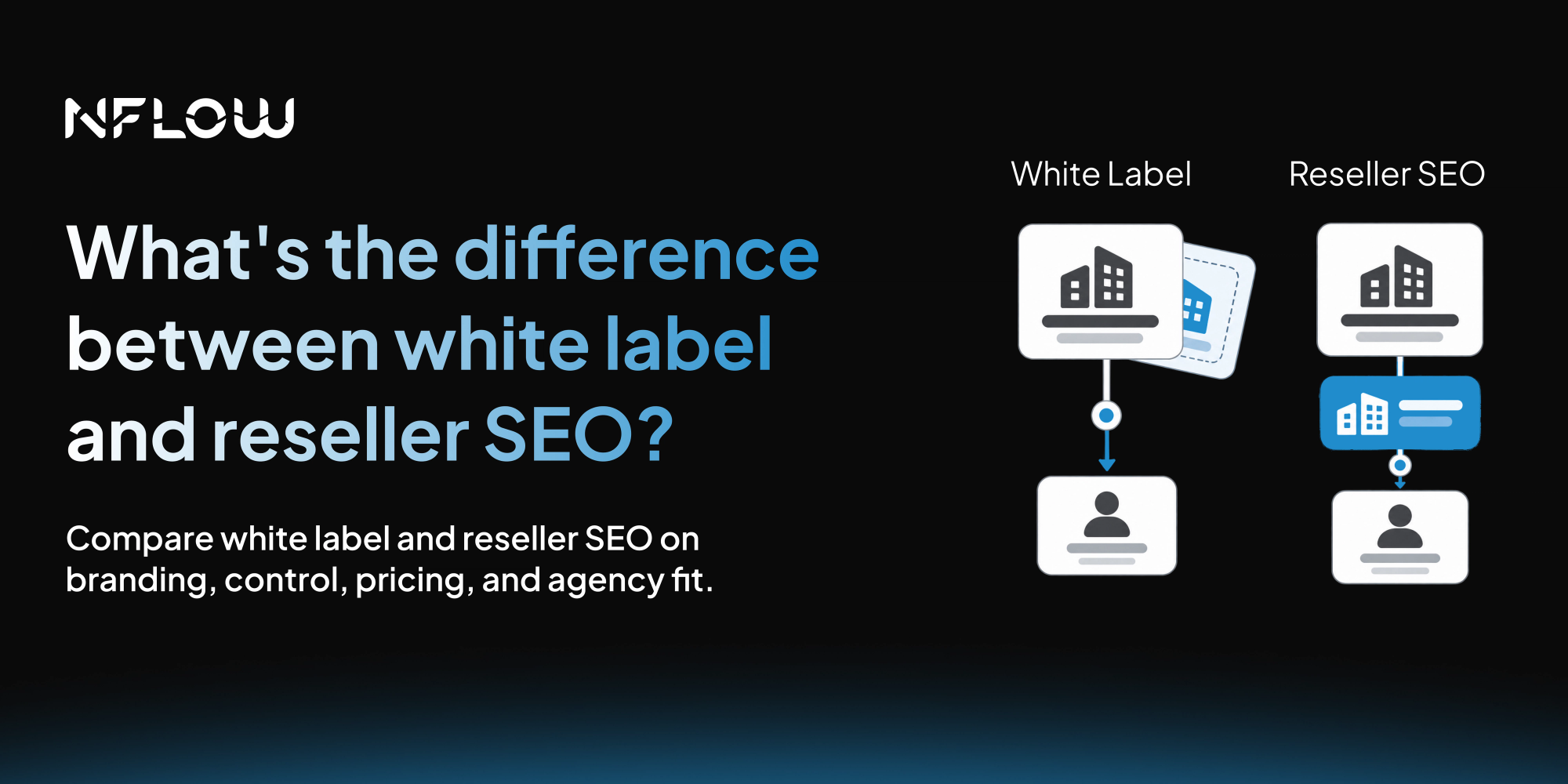
There is little practical difference: both mean one agency runs the Google Ads while another sells the work under its own brand. "Reseller" stresses the selling side and "white label" stresses the unbranded delivery, but they describe the same partnership. In everyday use, agencies treat the two terms as the same thing.