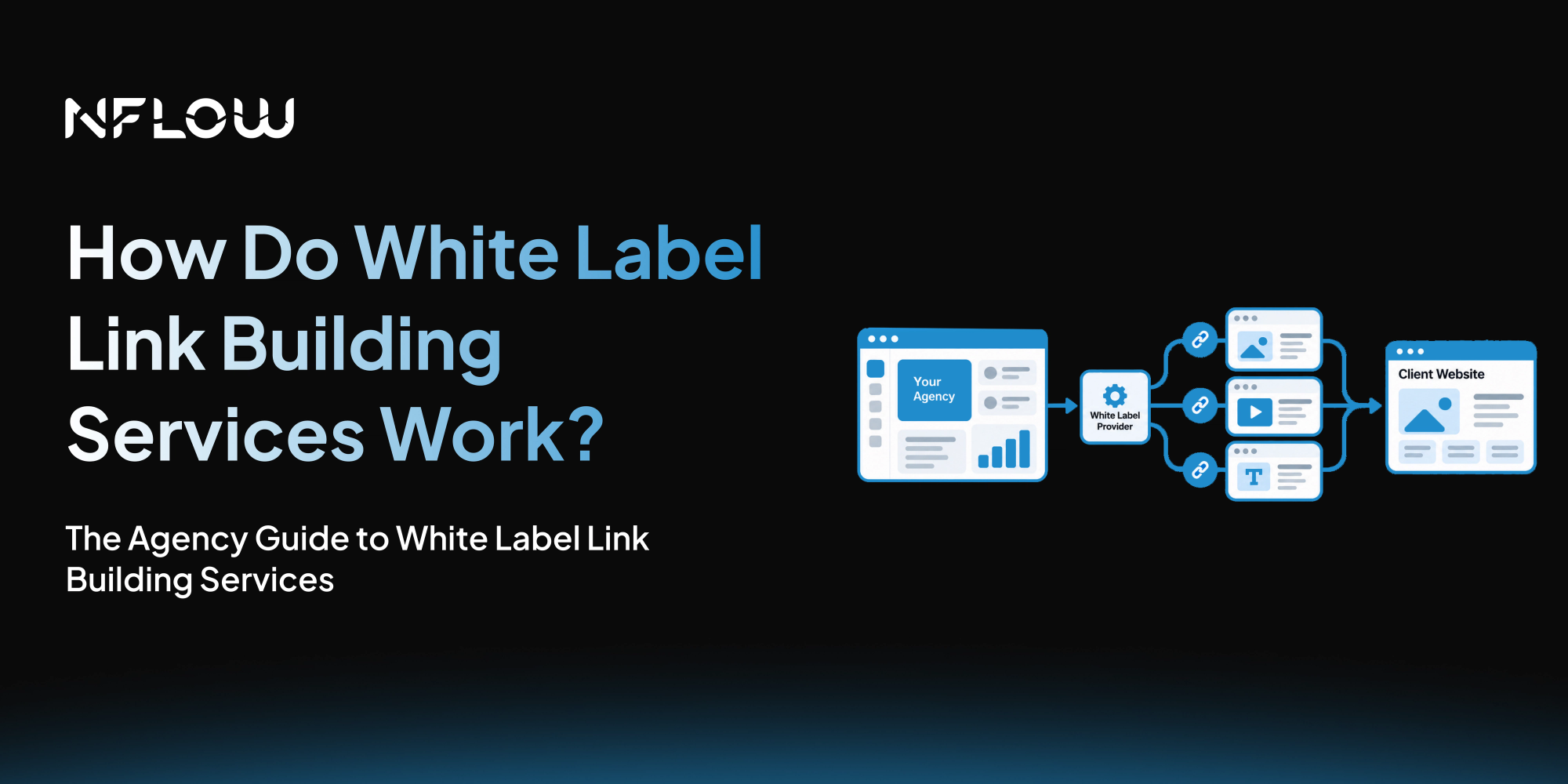


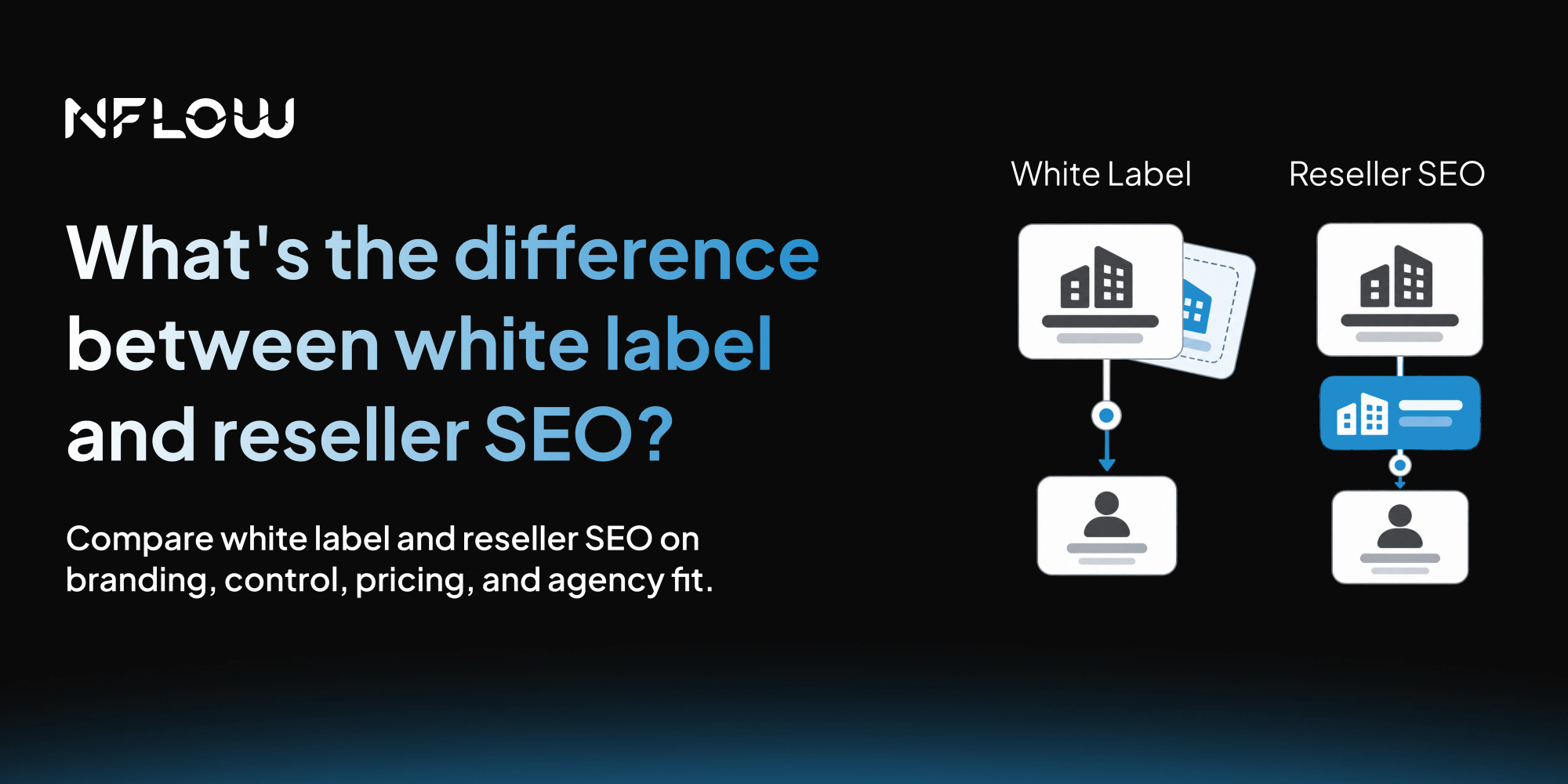
White label SEO vs reseller SEO comes down to one question: whose name is on the work your client sees. Both models let you sell SEO without hiring your own team of specialists. If you've shopped around for an SEO partner, you've probably seen both terms on the same sales page, sometimes in the same sentence. That isn't you missing something; plenty of vendors use them interchangeably. By the end of this guide, you'll know what each model actually means, how they differ in practice, and which one fits where your agency is right now.
Why This Comparison Matters
Pick the wrong model and you either give away margin you didn't need to, or you put a vendor's logo in front of a client who believes your team does the work. Both mistakes are fixable, but the second one costs trust, and trust is much harder to win back than a few hundred dollars a month.
Who Should Read This Guide
This guide is for agency owners, freelancers, and marketing managers who want to add SEO to their offer without building a specialist team. If you already sell web design, PPC, or social media and clients keep asking "can you do SEO too?", you're exactly who this is written for.
What Is Reseller SEO?
Reseller SEO is an arrangement where you sell an SEO provider's ready made packages to your own clients, usually with little change to the service, the reports, or sometimes even the branding. You're essentially a sales channel for someone else's product, earning the gap between what you pay and what you charge.
How the Reseller Model Works
The provider sets fixed packages, for example a local SEO plan with a set number of citations, blog posts, and backlinks each month, and you buy them at a wholesale rate and sell them at your own price. The provider does the work using their standard process, and reports often arrive on their template or through their dashboard, sometimes with a basic logo swap and sometimes without one.
Who Typically Uses Reseller SEO
Reseller programs suit web designers, IT firms, consultants, and small agencies that want SEO on the menu without managing it day to day. If SEO is a side offer rather than a core service, an SEO reseller program lets you earn a margin with very little operational effort.
What Is White Label SEO?
White label SEO is an arrangement where a provider does the SEO work behind the scenes and every deliverable, report, and touchpoint carries your agency's brand, so your client never knows a third party is involved. The provider is invisible; your agency is the only name the client ever sees. Our white label SEO guide goes deeper on the model itself.
How the White Label Model Works
Here's the simplest way to picture the difference: reseller SEO is like buying wholesale and selling the product exactly as it arrives, while white label SEO is like buying wholesale and putting your own label on it before it reaches the customer. The partner works from your brief and your client's goals, delivers rebranded reports and content, and talks only to you, while you own the strategy conversation and the client relationship. The same setup applies across other channels too, as our breakdown of how white label marketing works explains.
Who Typically Uses White Label SEO
Agencies that position SEO as a core service tend to go white label, especially once they have a steady base of monthly retainers. It's common among agencies whose clients expect a single team and a single point of contact for everything. Agencies serving lots of local businesses often start with white label local SEO before expanding into broader campaigns.
White Label SEO vs. Reseller SEO: Key Differences
The core difference is that reseller SEO sells a provider's standard service more or less as it comes, while white label SEO delivers custom work entirely under your brand, with you in control of the client relationship. One warning before the detail: because vendors use these labels loosely, always check what a partner actually delivers rather than what they call it.
Branding & Client Presentation
With a reseller setup, the client may see the provider's report templates, a shared dashboard, or even the provider's name in an email footer. White label keeps everything under your logo and voice, right down to the PDF file names and the sender address on monthly report emails.
That detail matters more than it sounds. A client who spots another company's name on a report starts wondering what else they haven't been told, and that question tends to surface at renewal time.
Control Over Strategy & Execution
Reseller packages are fixed menus, so you get the same deliverables whether the client is a dentist in a small town or a retailer with 40 stores. White label partners typically build a plan around each client's goals, and you can challenge priorities, approve content before it goes live, and change direction from one month to the next.
The trade is simple. With a reseller, you give up control in exchange for less work. With white label, you keep control, and control comes with the responsibility of actually using it.
Client Communication
In some reseller arrangements, the provider answers client questions directly or joins calls under their own name, which means your client is building a relationship with someone else's team. In a white label setup, all communication runs through you and the partner never contacts your client, which protects the account but means someone on your side has to be able to explain the work confidently.
Scalability & Flexibility
Reseller SEO scales easily in volume because every package is identical: add a client, add a package, done. White label scales in a different direction, handling more complex and varied accounts, but it asks more of your team in onboarding and account management as your client list grows. It also extends beyond SEO, so many agencies add white label Facebook advertising or white label ecommerce services once the first partnership is running smoothly.
Cost Comparison: White Label SEO vs. Reseller SEO
Reseller SEO is usually cheaper per client, while white label SEO costs more but gives you more room to price for value and keep clients longer. The ranges below reflect typical US market pricing and vary widely between providers, so treat them as a starting point for collecting quotes rather than a benchmark.
Pricing Structure of Reseller SEO
Most reseller packages are priced per client, per month, in fixed tiers. Expect roughly $250 to $750 a month for basic local SEO and $750 to $1,500 for broader national packages, with many agencies reselling at a markup somewhere between 50% and 100%.
Pricing Structure of White Label SEO
White label pricing is usually custom or tiered by scope, often starting around $500 a month for a small local account and running $2,000 to $5,000 or more for competitive or ecommerce clients. Some white label SEO agency partners also charge a one time onboarding or audit fee, commonly $300 to $1,500 per new client. For a fuller breakdown by service, see our guide to white label marketing agency pricing.
Which Is More Cost Effective for Agencies?
It depends on the kind of clients you sell to. If you have 20 small local businesses paying $800 a month and they only need a dependable baseline service, a reseller plan at $400 keeps a clean 50% margin with almost no management time. If you're pitching $3,000 retainers to a law firm or a software company, white label usually wins, because a custom strategy under your brand is what justifies that price, and a canned package will show its seams within a quarter.
Factor in your own hours too. White label work needs someone on your team reviewing deliverables and presenting results, which can easily run 2 to 4 hours per client each month. At 15 clients, that's close to a part time role, and it belongs in your margin calculation from day one.
Pros and Cons of Reseller SEO
Reseller SEO is the fastest, lowest effort way to add SEO to your services, but you trade away control and some of your brand's credibility to get there.
Advantages of Reseller SEO
-
Quick to launch, often within days of signing up.
-
Low overhead, since the provider handles strategy and delivery.
-
Predictable costs that make pricing and margins easy to calculate.
-
Very little SEO knowledge needed on your team.
Disadvantages of Reseller SEO
-
Standard packages rarely fit complex or competitive clients.
-
Provider branding or direct contact can weaken your client relationship.
-
You have little say in how the work gets done or how good it is.
-
Clients who shop around may find the same package sold cheaper elsewhere.
Pros and Cons of White Label SEO
White label SEO protects your brand and lets you sell higher value custom work, but it costs more and puts more responsibility on your team.
Advantages of White Label SEO
-
Every deliverable carries your brand and builds your agency's authority.
-
Strategy is tailored to each client's market and goals.
-
Supports premium retainers and longer client relationships.
-
You fully own the client relationship.
Disadvantages of White Label SEO
-
Higher cost per client than most reseller packages.
-
Someone on your team must review work and explain results to clients.
-
Onboarding often takes 2 to 4 weeks before work is fully underway.
-
If the partner slips, your brand takes the hit, not theirs.
Which Model Should You Choose?
Choose reseller SEO if you want SEO as a simple extra service with minimal effort, and choose white label SEO if SEO is a core part of your offer and your agency needs to own the client experience. Most agencies can answer this honestly in about ten minutes by looking at four things.
Factors to Consider
-
Budget: how much you can pay per client while still keeping a healthy margin.
-
Brand control needs: whether clients expect every report and every call to come from your team.
-
Client sophistication: an experienced marketing manager will spot a generic package quickly; a local plumber may not care as long as the phone rings.
-
Growth stage: how many SEO clients you have today and how many you realistically expect in 12 months.
Best Fit by Agency Size/Goals
A small agency or freelancer with a handful of SEO clients is usually better off starting with an SEO reseller program, because it's low risk, quick to launch, and easy to walk away from if SEO doesn't sell. A scaling agency with 10 to 30 retainers and clients asking sharper questions should move toward white label SEO, since custom strategy and consistent branding start to matter more than the cheapest package. An established agency often runs a mix, using a white label digital marketing agency for premium accounts and a reseller plan for smaller clients on tight budgets, and some eventually bring SEO fully in house once volume justifies full time salaries.
Conclusion
Neither model is better across the board; the right choice depends on how central SEO is to your agency and how much of the client experience you need to own.

FAQs
Is White Label SEO the Same as Reseller SEO?
No, reseller SEO means selling a provider's standard SEO packages largely as they are, while white label SEO means a provider does custom work that is fully branded as your agency's with no visible link to the provider. Because some vendors use the two terms interchangeably, always confirm what a specific arrangement actually includes before signing. The quickest test is to ask whose logo appears on the reports and who answers the client's questions.
Which Model Is Cheaper?
Reseller SEO is usually cheaper, with typical US packages running about $250 to $1,500 per client per month, compared with roughly $500 to $5,000 for white label SEO. The cheaper option isn't always the more profitable one, since white label work often supports much higher client retainers. Compare your margin per client and the hours your team spends on each account, not just the wholesale price.
Can I Switch Between Models Later?
Yes, agencies can move from reseller SEO to white label SEO, or the other way around, as their client base and needs change. To switch smoothly, check contract notice periods, confirm you own all client data and account access, and move reporting over so clients see no disruption. Most switches go best when you move a few clients first rather than your whole book at once.
Can I Use Both Models at the Same Time?
Yes, many agencies run a reseller plan for smaller, budget conscious clients and a white label partner for premium retainers. This works well as long as each client gets consistent reporting and a single point of contact at your agency, whichever model sits behind their account.
Will My Clients Know I'm Using a White Label SEO Partner?
With a genuine white label SEO arrangement, clients shouldn't know, because every report, email, and deliverable carries your agency's brand and the partner never contacts them directly. A signed NDA and a clear rule that all communication runs through your team are the two safeguards to insist on before you start.
Do I Need SEO Experience to Offer White Label SEO?
You don't need to do the SEO work yourself, but someone on your team should understand it well enough to review reports and explain results to clients. Without that, white label SEO becomes hard to sell confidently, and an SEO reseller program may be the safer starting point.
What Should I Look for in an SEO Reseller Program?
Look for clear package deliverables, sample reports you can review before signing, realistic timelines, and honest answers about how links and content are produced. Avoid any provider that guarantees specific rankings, since no legitimate SEO provider can control how search engines rank a site.
How Long Do Results Take With Either Model?
SEO results usually take 3 to 6 months to show meaningful movement and 6 to 12 months to build strong momentum, whether the work comes through a reseller or a white label partner. The model changes who does the work and whose brand is on it, not how quickly search engines respond.