


A white label eCommerce service agency builds, launches, and maintains online stores that get delivered under someone else's brand. The reselling agency keeps the client relationship and the invoice, while the partner behind it writes the Liquid, fixes the broken checkout, and clears the support queue. The model spread for the same reason agencies use a white label digital marketing agency for SEO and ads: Shopify, WooCommerce, and Magento work has split into specialist skill sets a six person shop cannot staff on payroll. What follows covers how these partnerships actually run, what they cost in 2026, how to vet a provider, and where the arrangement tends to fall apart.
What Is a White Label eCommerce Service Agency?
A white label eCommerce service agency is a delivery partner that builds and manages online stores for other companies, who then resell that work under their own brand. Your client sees your logo on the reports and your account manager on the Friday call, while another team pushes the theme code and rebuilds the Performance Max campaign structure.
White Label eCommerce Meaning Explained
White label eCommerce means the work is produced by one company and branded by another, with the producing company staying anonymous to the end customer. The reseller sets pricing, owns positioning, and carries the account.
White Label vs Private Label eCommerce: What's the Difference?
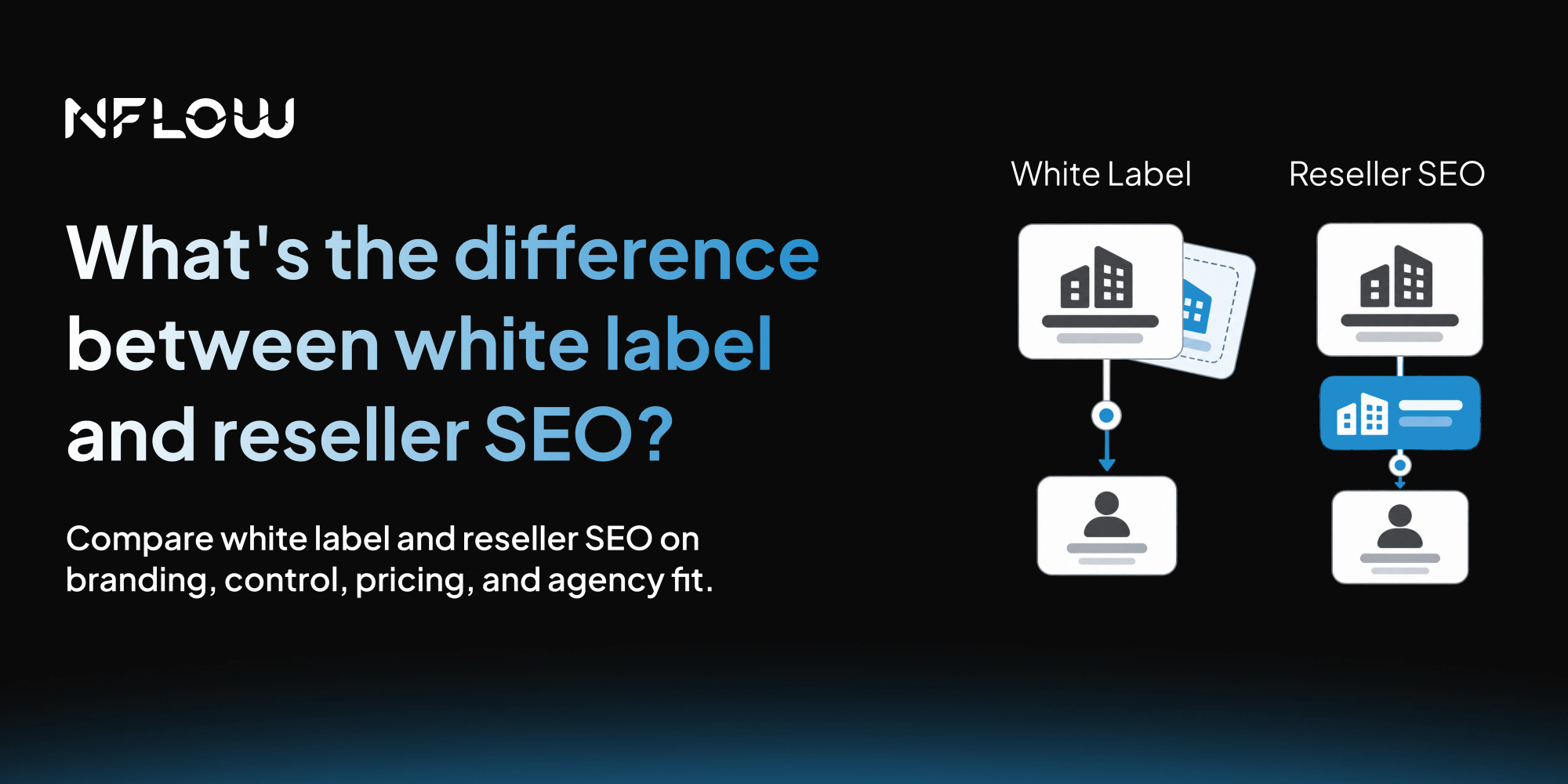
White label eCommerce rebrands services; private label rebrands products. A private label brand puts its name on a manufacturer's existing shampoo formula, while a white label eCommerce agency puts its name on another firm's Shopify build and SEO work.
How White Label eCommerce Services Work
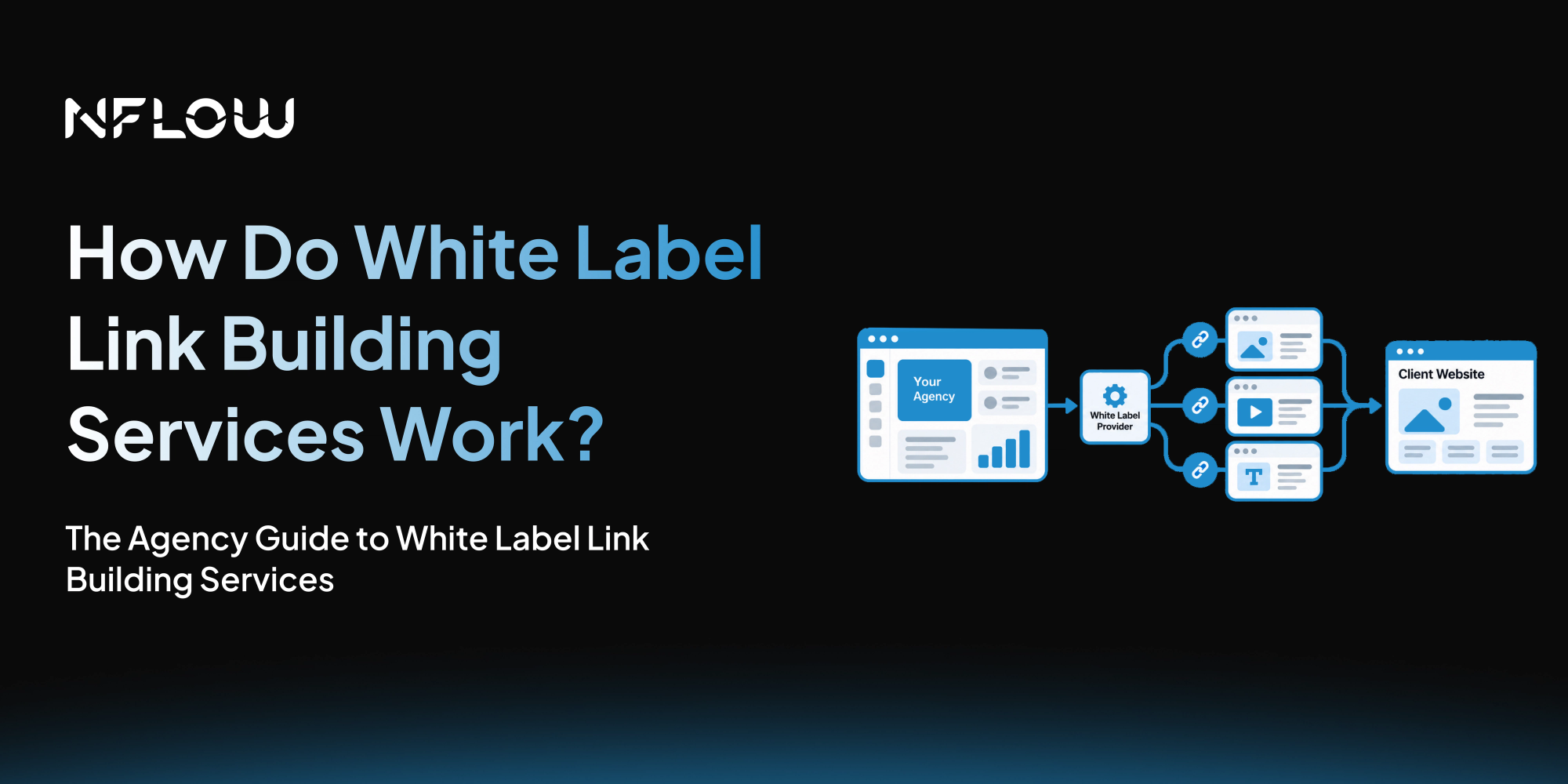
White label eCommerce services run on a wholesale contract between two businesses, where the partner delivers at a fixed internal rate and the reseller charges the client whatever the market will bear. Most partners sign a non solicitation clause and use unbranded documents and email aliases so nothing traceable reaches the client.
The White Label eCommerce Business Model Explained
The partner charges wholesale, the reseller typically marks it up 1.6x to 2.5x, and the margin sits in that spread. Because the reseller owns the account, retention risk stays with the reseller and delivery risk stays with the partner, which mirrors how white label marketing works in every other service line.
White Label eCommerce Fulfillment Process (Step by Step)
-
Reseller scopes the client requirement and sends the partner a brief with platform, timeline, and budget.
-
Partner returns a wholesale quote and a delivery schedule, usually within two business days.
-
Reseller marks it up, sells it under its own brand, and collects the deposit.
-
Partner builds inside the client's Shopify or WordPress instance using a limited access staff account.
-
Reseller reviews on staging, requests revisions, and presents the finished store as its own work.
Top Benefits of Hiring a White Label eCommerce Agency
The core benefit is selling eCommerce work at full retail price without carrying the payroll, software stack, and training load that delivery requires. Capacity becomes a variable cost you turn on per project.
Why Agencies Outsource eCommerce Services to White Label Partners
Agencies outsource because eCommerce delivery demands a wider bench than most retainers can fund: a theme developer, a feed specialist, a technical SEO, and someone who understands tax and shipping logic. Hiring all four for two active stores destroys the margin the retainers were supposed to produce.
How White Label eCommerce Solutions Save Time & Cost
A senior Shopify developer in the US costs roughly $115,000 to $140,000 a year fully loaded, and that person sits idle between builds. A white label partner delivering the same volume of work runs closer to $2,500 to $5,000 a month, and the cost drops to zero in a slow quarter.
Who Needs White Label eCommerce Services?
White label eCommerce services fit any business that can sell store work faster than it can staff it.

White Label eCommerce for Digital Marketing Agencies
SEO and paid social agencies get asked to "just build the store" constantly, and saying no sends the whole account to a competitor who says yes. A white label eCommerce agency lets you quote that build the same week without touching your hiring plan, and the finished store then feeds the SEO marketing campaign you were already running.
White Label eCommerce Store Setup for Startups & Small Businesses
Startups use white label online store setup to launch on Shopify in two to four weeks instead of spending three months interviewing developers. Small retailers moving offline inventory online get the same benefit at a fraction of the cost of an in house hire.
Key White Label eCommerce Services You Can Outsource
Almost every layer of an eCommerce engagement can be delivered white label, from the initial build through to daily customer support. Most agencies start with one service and add others once the partner has proven turnaround.
White Label Website Development (Shopify, WooCommerce, Magento)
Development partners handle Shopify theme customization and app integrations, WooCommerce builds with WooPayments and subscription plugins, and Magento or Adobe Commerce work involving multi store setups and ERP connections.
White Label SEO Services for eCommerce Brands
eCommerce SEO partners handle collection page optimization, faceted navigation and crawl control, product schema, and the internal linking work that makes large catalogs rank, which is white label SEO applied to catalog pages instead of service pages.
White Label PPC & Paid Ads Management for eCommerce
Paid partners manage Google Shopping feeds, Performance Max asset groups, and Meta catalog campaigns, then deliver reporting in your branding.
White Label Product Sourcing & Inventory Management
Sourcing partners find suppliers, negotiate unit costs, and keep stock counts synced between store and warehouse.
White Label Customer Support Outsourcing for eCommerce
Support partners staff live chat, email, and return under your client's brand, often across time zones you cannot cover.
How to Choose the Best White Label eCommerce Partner
Pick a partner on delivery evidence and communication discipline, not on price, because the cheapest quote almost always costs more once revisions and missed deadlines land on your account manager. Ask for live stores they built, then check page speed, checkout behavior, and whether the theme code looks maintained or bolted together. A paid trial project of $1,000 to $3,000 tells you more than any sales call.
White Label eCommerce Agency Checklist
-
Live store examples on your target platform, with URLs you can inspect yourself
-
Named point of contact with defined response hours in your time zone overlap
-
Written SLAs covering turnaround, revision rounds, and bug fix windows
-
A signed NDA plus a non solicitation clause covering your clients
-
Unbranded deliverables: reports, decks, staging links, and email aliases
-
Clear ownership of code, accounts, and creative assets when the relationship ends
Questions to Ask a White Label eCommerce Provider Before Hiring
-
Who is actually doing the work, and are they employees or subcontractors?
-
What happens if a build runs past the agreed deadline?
-
How many revision rounds are included before you start billing extra?
-
Will you support the store after launch, and at what rate?
-
Can you handle a client call on my behalf if I need you to, and under what name?
White Label eCommerce Pricing & Cost Breakdown
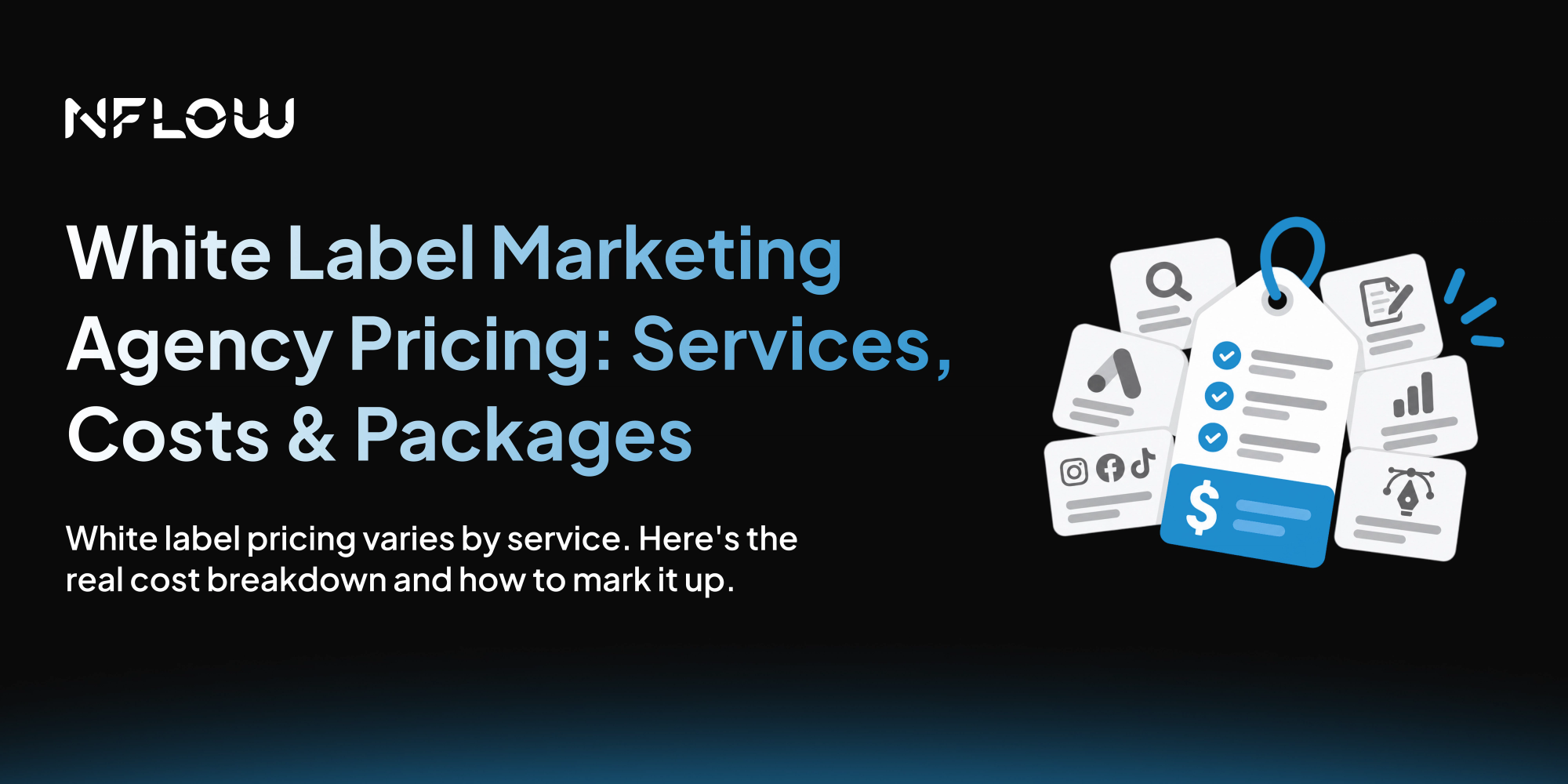
White label eCommerce pricing in 2026 runs from about $1,500 for a themed Shopify launch to well past $100,000 for enterprise Magento work, with monthly services billed as retainers or as a percentage of ad spend.
How Much Does White Label eCommerce Cost in 2026?
White label eCommerce costs in 2026 fall into one time build fees and ongoing monthly service fees, and the figures below are wholesale rates paid by the reselling agency, not client facing prices.
White Label eCommerce Pricing Models Compared
-
Project based: one fixed fee per build or migration. Predictable, easy to mark up, best for launches and one time work.
-
Monthly retainer: a set fee for a defined scope of ongoing work. Best for SEO, paid media, and maintenance where output varies.
-
Revenue share: the partner takes a percentage of store revenue or ad spend. Rare and worth scrutiny, since it ties your margin to results you only partly control.
-
Per store setup: volume pricing for resellers launching several stores a month. The cheapest per unit rate, but usually needs a minimum commitment.
Get a custom quote based on your exact needs. [Request Pricing →]
Best White Label eCommerce Agencies Compared
White label eCommerce providers fall into three broad categories, and the right choice depends far more on which one matches your client mix than on any published ranking. Rankings in this space are mostly paid placements, so evaluate categories first.
Top White Label eCommerce Companies for Agencies
Platform specialists go deep on one stack, usually Shopify or WooCommerce, and deliver faster within that lane than anyone else. Full service fulfillment partners cover build, SEO, ads, and support under one contract, which simplifies management but rarely produces top tier work everywhere. Niche dropship and sourcing partners handle supplier networks and inventory logistics rather than development, which matters when the client's problem is supply.
White Label eCommerce Platform Comparison Table
Real Success Stories: Scaling With White Label eCommerce Services
The two scenarios below are illustrative composites of how these partnerships typically play out, not client case studies.
A four person SEO agency kept losing retainers when clients asked for store rebuilds it could not deliver. After signing a Shopify focused partner, it quoted builds at $9,000 against a $4,000 wholesale cost, closed roughly one a month, and kept the SEO retainer attached to each.
A web design studio with WordPress skills but no paid media capability added white label Google Shopping management at $900 a month wholesale, resold at $2,200. Within two quarters, ads revenue covered the studio's entire office and software overhead.
Common Challenges in White Label eCommerce Partnerships (& Fixes)
Most white label relationships fail on process rather than skill, and nearly every failure traces back to something that was never written down.
Inconsistent quality across projects. Build a written QA checklist covering page speed, mobile rendering, checkout flow, and analytics tracking, and run every build through it before the client sees staging.
Slow turnaround during busy periods. Put turnaround times in the contract as SLAs with a defined remedy, and ask how many active projects the partner runs at once.
Communication gaps across time zones. Fix a daily overlap window and a single named contact rather than a shared inbox nobody owns.
Scope creep on fixed price builds. Define exactly what a revision is, cap the included rounds, and set an hourly rate for anything beyond it.
Accidental brand exposure. Audit everything the partner sends you: file names, PDF metadata, staging URLs, and email signatures all leak.
Future Trends in White Label eCommerce (2026 & Beyond)
The clearest shift is that routine production work is getting cheaper while strategy and quality control get more valuable, which changes what you should be paying a partner for. Buy judgment, not keystrokes.
AI Driven White Label eCommerce Automation
Partners now use AI for product description generation at catalog scale, image cleanup and background replacement, and first line support triage, pulling the cost of bulk content work down noticeably. Ask any partner what their editing process looks like before you accept generated output into a client store. Discovery is also moving into AI answers, which is why generative engine optimization and ChatGPT SEO now sit inside eCommerce SEO scope.
Niche White Label eCommerce Services on the Rise
Demand is growing fastest for narrow, technical services: headless commerce builds, B2B portals with customer specific pricing, subscription billing logic, and marketplace management across Amazon and TikTok Shop. These carry higher wholesale rates because few teams deliver them well, and fewer still can report on brand visibility in AI search engines.
Conclusion
A white label eCommerce agency makes sense when you can sell store work faster than you can hire for it, and when the margin between wholesale cost and your retail price justifies the management overhead. It makes less sense if eCommerce is your core differentiator and you plan to build a permanent team around it. The decision comes down to three things covered above: your deal flow, your appetite for fixed payroll, and how disciplined you are about contracts and QA.

FAQs
What is a white label eCommerce agency?
A white label eCommerce agency is a company that builds and manages online stores for other businesses, who then sell that work to their own clients under their own brand. The white label agency stays anonymous to the end client.
How much does white label eCommerce cost?
White label Shopify builds typically cost $1,500 to $25,000 depending on customization, WooCommerce builds run $3,000 to $12,000, and Magento projects start around $30,000. Monthly services run $800 to $3,500 for eCommerce SEO and $500 to $2,500 for paid media management.
Will customers know a third party is involved?
No, provided the partnership is set up properly with an NDA, unbranded deliverables, and all communication routed through the reselling agency.
What platforms do white label eCommerce agencies support?
Most support Shopify and WooCommerce as standard, with fewer offering Magento or Adobe Commerce, BigCommerce, and headless setups built on Shopify Hydrogen or a similar framework.
How do I choose the right white label eCommerce partner?
Verify live stores they have built on your target platform, confirm written SLAs and a named contact, and run a small paid trial project before routing a significant client through them.
Can I white label just one service instead of everything?
Yes, and most agencies should start that way, outsourcing a single service such as store builds or Shopping ads to test the partner before expanding.