

A client asks for Google Ads on Monday, and nobody on your team runs them. You can hire, decline, or white label.
This guide is for agency owners, freelancers, and consultants who sell marketing but have no PPC specialist. White label PPC management gives you a third path, and this guide shows how it works and what it costs. PPC stands for pay-per-click, meaning you pay each time someone clicks your ad. I've watched agencies say yes first and sort out delivery later, and that's where problems start. By the end, you'll know whether it fits your agency.
What Is White Label PPC Management?
Your client sees your logo and your reports. Someone else does the work behind the scenes.
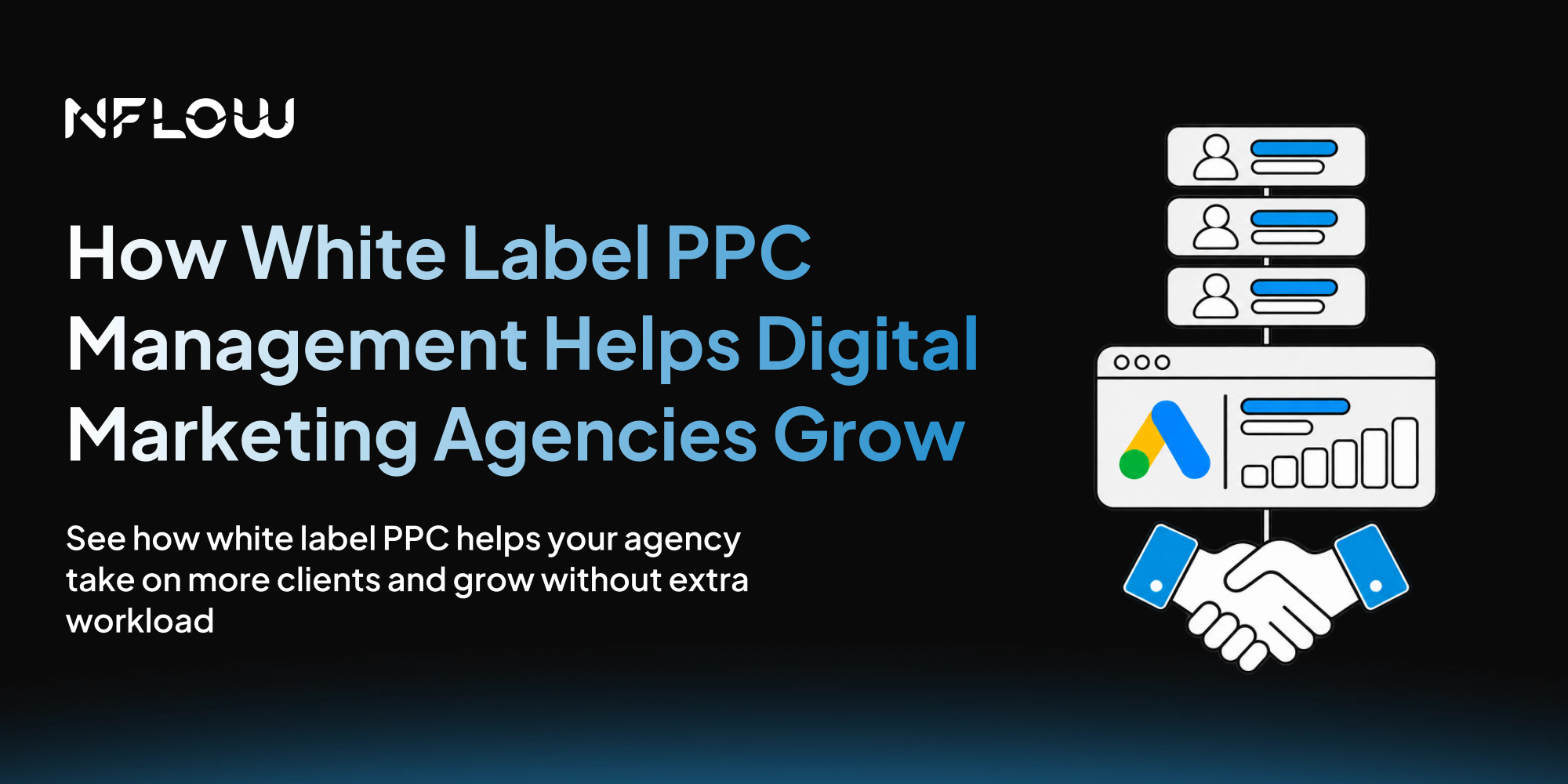
White label PPC management means a provider builds and runs Google Ads for your clients while you deliver the service under your own brand.
Picture a restaurant that uses a specialist kitchen. Diners see the restaurant's name, while the specialist cooks out of sight. You're the restaurant: you sell, set prices, and own the client. The provider builds and tunes the campaigns. The same model works for SEO and other services, as this white label digital marketing guide explains.
White label vs. gray label PPC
White label PPC keeps the provider fully hidden, while gray label PPC lets some of the provider show.
In the common meaning, a white label provider stays fully hidden and the work carries your brand. With gray label PPC, the provider's name, branding, or people are visible or disclosed. Definitions vary, and a PPC reseller can work either way, so ask each provider what they mean.
How White Label PPC Works, Step by Step
When it works, the client sees one smooth agency. Here is what happens behind that.
A white label engagement moves through onboarding, campaign build, reporting, and account control, and each stage needs a named owner.
Onboarding and ad account access
Onboarding is when the provider collects goals, budget, website access, and a way into the ad account. Most use a manager account (MCC), a Google Ads login that lets one team view and manage many client accounts. Agree up front on what counts as a lead or sale. For a longer walkthrough, see how a white label Google Ads agency works.
Campaign build and optimization
Build is the setup work, and optimization is the steady tuning after launch. Build covers keyword research, ad copy, targeting, and conversion tracking, which counts valuable actions like calls or purchases. Optimization means regular checks on search terms, bids (the most you'll pay per click), and ads.
Reporting and client communication
Reporting is the part your client actually sees, so it should carry your brand and use plain words. Providers usually send a branded report or a dashboard, an online page with live numbers. Some providers also offer their own dashboard, so ask whether it carries your logo and whether your client can log in. I'd present the first two reports yourself to learn the account.
Account ownership, access, and compliance (expert)
The client's business should own its ad accounts, and the provider should get access, never the reverse. According to Google Ads Help (2026), only admin access can give access, change access levels, and unlink managers. Google's security guidance (2026) says to give each person the minimum access they need.
Ad spend goes to Google, and management fees go to the provider or you. Google Ads and Microsoft Advertising can limit or suspend accounts for policy violations, and responsibility usually sits with the account owner. Have a lawyer review the contract.
What I check first is whether the client's own email is admin on the account. If it isn't, nothing else matters. Before giving anyone access, confirm in writing:
-
The client is an admin on their own account.
-
Who pays Google, and who checks ads for policy.
-
How fast access ends if you part ways.
White Label PPC Services: Google Ads, Microsoft Advertising, and Shopping
Not every provider covers every channel, so check the list before you promise a client anything.
The only channel list that counts is the one in your written agreement.
White label Google Ads work can include several of these services:
-
Search: text ads shown when someone types a query.
-
Shopping: product ads with a photo and price. Per Google Ads Help (2026), Shopping and Performance Max rely on product attributes such as condition and price, not keywords. They need the Merchant Center, Google's tool for uploading product data such as titles, prices, and availability. Merchant Center Help (2026) warns that a missing required detail can keep a product from showing, so someone has to own the product feed and keep it current.
-
Performance Max: per Google Ads Help (2026), a goal-based campaign type that reaches YouTube, Display, Search, Discover, Gmail, and Maps from one campaign.
-
Display: image ads across websites.
-
YouTube: video ads.
-
Microsoft Advertising: ads on Bing. Its import tool, per Microsoft Advertising Help (2026), can copy Google Ads campaigns across. I'd still review every imported campaign before launch, because settings don't always carry over the way you expect.
Providers differ in depth. Some only run Search, while others add Shopping, Performance Max, Display, YouTube, and Microsoft Advertising. If you sell a service your provider doesn't cover, you're stuck, so match every promise to the written scope.
Confirm in writing:
-
Which channels and campaign types are included.
-
Who builds and fixes the product feed.
-
Whether Microsoft Advertising is included or priced separately.
White Label PPC Pricing Models and Typical Costs
Most providers hide prices behind a form, so here is how to read the numbers you can find.
White label PPC pricing usually comes as a flat fee, a percent of ad spend, a per-account fee, or a mix. Ad spend, the money paid to Google or Microsoft for clicks, is always separate from the provider's fee.
Flat fee, percent of ad spend, per-account, and hybrid pricing
Each pricing model puts the risk in a different place.
Flat and hybrid prices are retail agency fees from Search Engine Journal (202). The percent figure is only a rough idea from AgencyAnalytics (2026). None include ad spend. To compare quotes, convert each one to a percent of ad spend and a cost per account per month. This example is illustrative, with round numbers, not real prices. A provider charges $400 a month for a client spending $2,000 on ads. That is 20% of ad spend and $400 per account. Do the same for every quote, and they line up.
Typical wholesale costs for agencies
Wholesale cost is what you pay the provider each month, before you add your own markup.
I don't have a verified wholesale range, and most providers don't publish one. [STAT NEEDED: current wholesale white label PPC fee range; verify in a named industry survey or at Clutch.]
The retail prices in the table show what advertisers pay agencies, not what you pay a provider, so use them only to sanity-check what clients may expect.
Four things drive wholesale cost: ad spend size, the number of campaigns and platforms, reporting depth, and contract length. Ad spend itself stays separate and goes to the ad platform. For pricing on other services, the white label marketing pricing guide is a useful comparison.
How to Price PPC for Your Clients: Markup and Margin Math (expert)
Markup and margin are not the same thing. Do this math before you sign.
Markup measures your profit against what you pay the provider, and margin measures the same profit against what you charge the client.
Markup vs. margin, explained simply
Markup and margin use the same profit number but divide it by different things. Provider cost, also called wholesale cost, is what you pay the provider each month.
Markup = (client price − provider cost) ÷ provider cost
Margin = (client price − provider cost) ÷ client price
A worked example from provider cost to client price
This example is illustrative, with round numbers, not a real result.
-
Provider cost: $800 a month. Client price: $1,200 a month.
-
Profit: $1,200 − $800 = $400.
-
Markup: $400 ÷ $800 = 50%.
-
Margin: $400 ÷ $1,200 = about 33%.
Now work backward from the margin you want. For a 40% margin on a $900 cost, price = $900 ÷ (1 − 0.40) = $900 ÷ 0.60 = $1,500.
The mistake I see most often is quoting from a markup, then finding the margin is thinner than expected. Other things eat margin too: revision time, client calls, reporting setup, and billing delays. What I'd do: price from the margin you need and count your own hours as cost.
White Label PPC vs. In-House Hire vs. PPC Platform: A Decision Framework (expert)
The right choice depends on how many clients you have, not on which option sounds best.
White label fits a few PPC clients with uneven demand, a hire fits steady volume, and a platform fits small accounts you want to learn yourself.
When white label PPC makes sense
White label PPC makes sense when demand is real but too small or uneven to justify a salary.
My rule of thumb, not an industry fact: it fits when you have roughly one to five PPC clients, their spend moves around, and PPC is an add-on to your main offer. As a PPC reseller, you can sell white label Google Ads next week instead of after a hiring search.
When to hire in-house
Hire in-house when PPC becomes steady, core revenue and you want the skill inside your agency.
Another rule of thumb from my experience: weigh a hire at roughly eight to ten steady PPC accounts, once managed spend clearly covers a salary. Compare one salary with the provider fees you would stop paying.
When a PPC platform is enough
A PPC platform is enough when accounts are small and simple and you want to learn the work yourself.
These software tools offer automation and campaign setup help, but you still make the decisions and own the results.
White label is the wrong choice if PPC is your core product, if client budgets can't cover the provider's cost plus your margin, or if you need full control over every change.
Benefits and Trade-Offs of White Label PPC for Agencies
You gain capacity and give up some control. Decide if that trade fits your agency.
White label PPC adds delivery capacity quickly, and the price is less control and a thinner margin.
Benefits:
-
Capacity: you can say yes to Google Ads this month without hiring.
-
Speed: there's no recruiting, no training period, and no salary to carry.
-
Flexibility: costs follow the number of clients you have. If a client leaves, you stop paying for that account.
Trade-offs:
-
Control: changes happen on the provider's schedule, not yours. An urgent client edit may wait until the next day, so agree on response times before you sign.
-
Margin: you pay the provider's cost before you add your own profit. The markup math earlier shows how a 50% markup becomes only about a 33% margin.
-
Quality risk: your brand carries the provider's mistakes. A broken tracking tag or an off-topic ad reaches your client under your name, so spot-check often.
-
Dependence: if the provider raises prices or drops your service, you have a gap to fill. Keeping ad accounts in your client's name makes switching much easier.
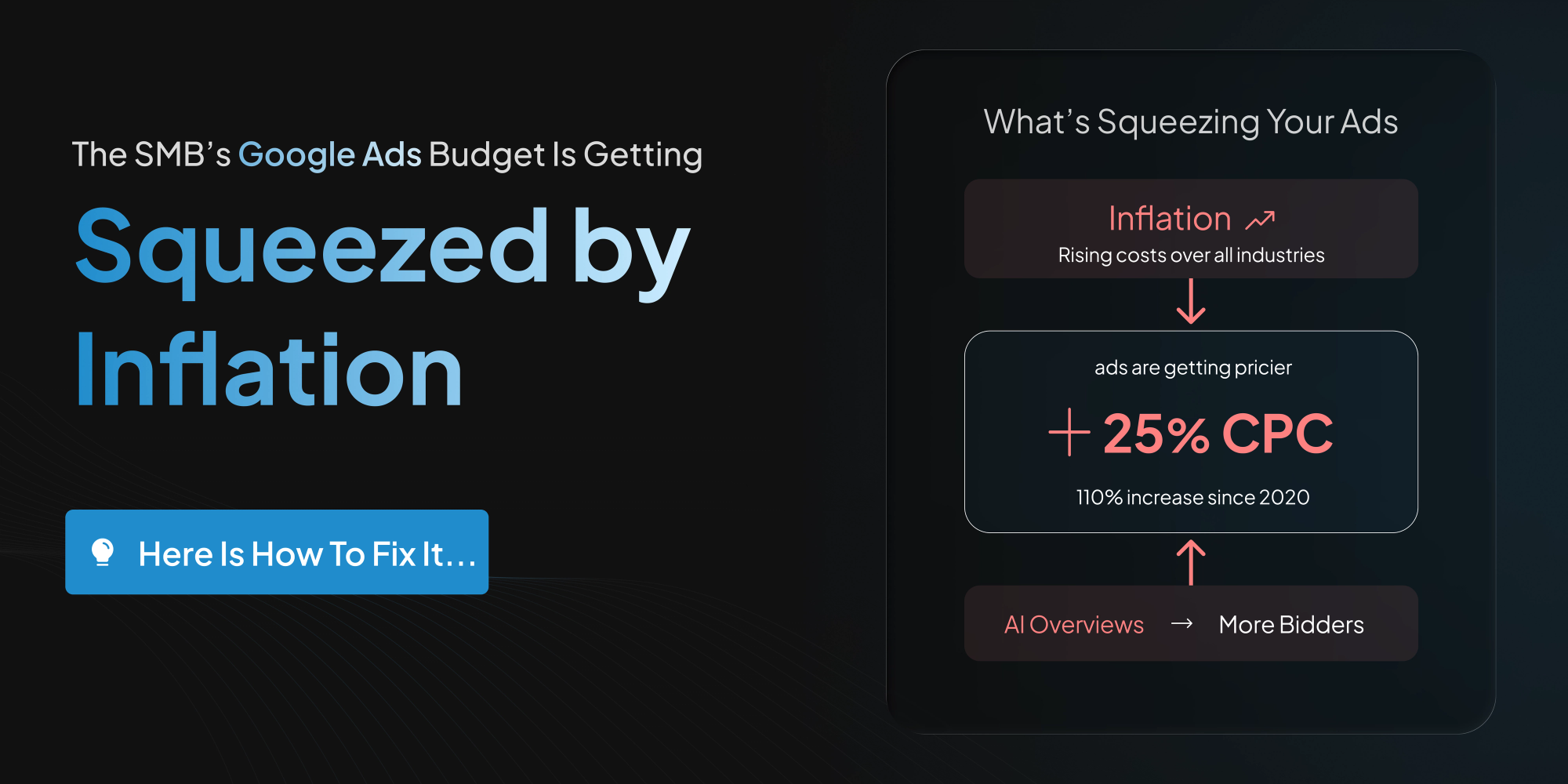
According to WordStream (2026), the median cost per click (CPC), the price of one ad click, was $5.42 across 13,474 US search campaigns from April 2025 to March 2026. At that price, $1,000 of ad spend buys about 185 clicks, so a small budget leaves little room for a provider's fee plus your margin. Results also depend on offer, website, and tracking quality, so no provider can promise sales.
How to Choose a White Label PPC Agency or Partner
A good provider is easy to talk to before the contract. Pay attention to that.
Judge a white label PPC agency by how clearly it answers specific questions about people, ownership, reporting, and exit terms.
Questions to ask before you sign
Use these eight questions on every provider call.
-
Who works on my accounts, and what is their experience?
-
Who owns the ad accounts, and who holds admin access?
-
How do you report, and can I see a sample report?
-
What is the contract length, and what is the exit clause?
-
What is your minimum, if any, for ad spend or fees?
-
How do you handle a policy problem or a suspended account?
-
Who answers my questions, and how fast?
-
What happens to my clients' accounts if you stop working with me?
Red flags
A red flag is any answer that stops you verifying the work or leaving cleanly.
-
Guaranteed results: no one controls competitors or your client's offer.
-
No access to your own accounts: you can't verify the work or leave.
-
Vague reporting: you can't explain results to your client.
-
No clear contract terms: fees and exits turn into arguments later.
A Google Partner badge doesn't prove quality. Requirements change, so verify any provider's status on Google's Partners page.
Conclusion
White label PPC is a trade of control for capacity, and it works when the client owns the account and you check the numbers early. Do the markup math first and keep the test small. Write down who owns the ad accounts and who checks ads for policy. Then judge the provider on its first 30 days: clear reports, honest answers, and numbers you can explain to your client. If the fit is wrong, you've lost a month, not your agency.
FAQs
What is white label PPC management?
White label PPC management means a provider builds and runs Google Ads and similar campaigns for your clients while you present the work as your own. You sell the service, own the client relationship, and pay the provider a wholesale fee.
What does a white label PPC provider actually do?
A provider usually handles campaign setup, ad writing, bid and budget changes, tracking checks, and reports. Some also join client calls. Scope differs by provider, so get the task list in writing before you sell anything to a client.
How much does white label PPC cost?
Most providers don't publish prices, and I don't have a verified wholesale range. Fees usually depend on ad spend size, number of campaigns and platforms, reporting depth, and contract length. Ad spend is separate and goes to the ad platform.
What markup should an agency charge on white label PPC?
There's no standard markup. Work backward from the margin you need: price = provider cost ÷ (1 − target margin). For example, a $900 cost and a 40% target margin gives a $1,500 price. Then count your own time as part of the cost.
Is a flat fee or a percentage of ad spend better?
Neither wins everywhere. A flat fee suits steady accounts and predictable costs. A percent of ad spend suits budgets that change often, but the fee rises with spend, not with work. Convert every quote to one monthly number before deciding.
Is there a minimum ad spend to start?
Some providers set minimums and some don't. Ask whether the minimum applies to ad spend, to the provider's fee, or both, and what happens if a client's budget drops below it. Get the answer in writing.
Who owns the ad accounts?
The client's business should own its ad accounts and give the provider access through a manager account or an access level. Confirm ownership, access, and billing in writing before anyone logs in. Google Ads Help lists the access levels.
Will my clients know I use a white label provider?
Under the common meaning of white label, no, because the provider stays hidden and the work carries your brand. Under the gray label, some involvement is visible or disclosed. Check your contracts for disclosure terms, and have a lawyer review the wording.
Who is responsible if a campaign goes wrong or breaks a platform rule?
It depends on your contract and on who owns the account, since responsibility usually sits with the account owner. Spell out who checks ads for policy and who pays for fixes, and have a lawyer review it. This isn't legal advice.
Is white label PPC worth it for small agencies and small-budget clients?
It can be, if the numbers work. Small budgets leave little room for a provider's fee plus your margin. Run the markup math first and ask about minimums. If the numbers don't work, decline or try a platform.